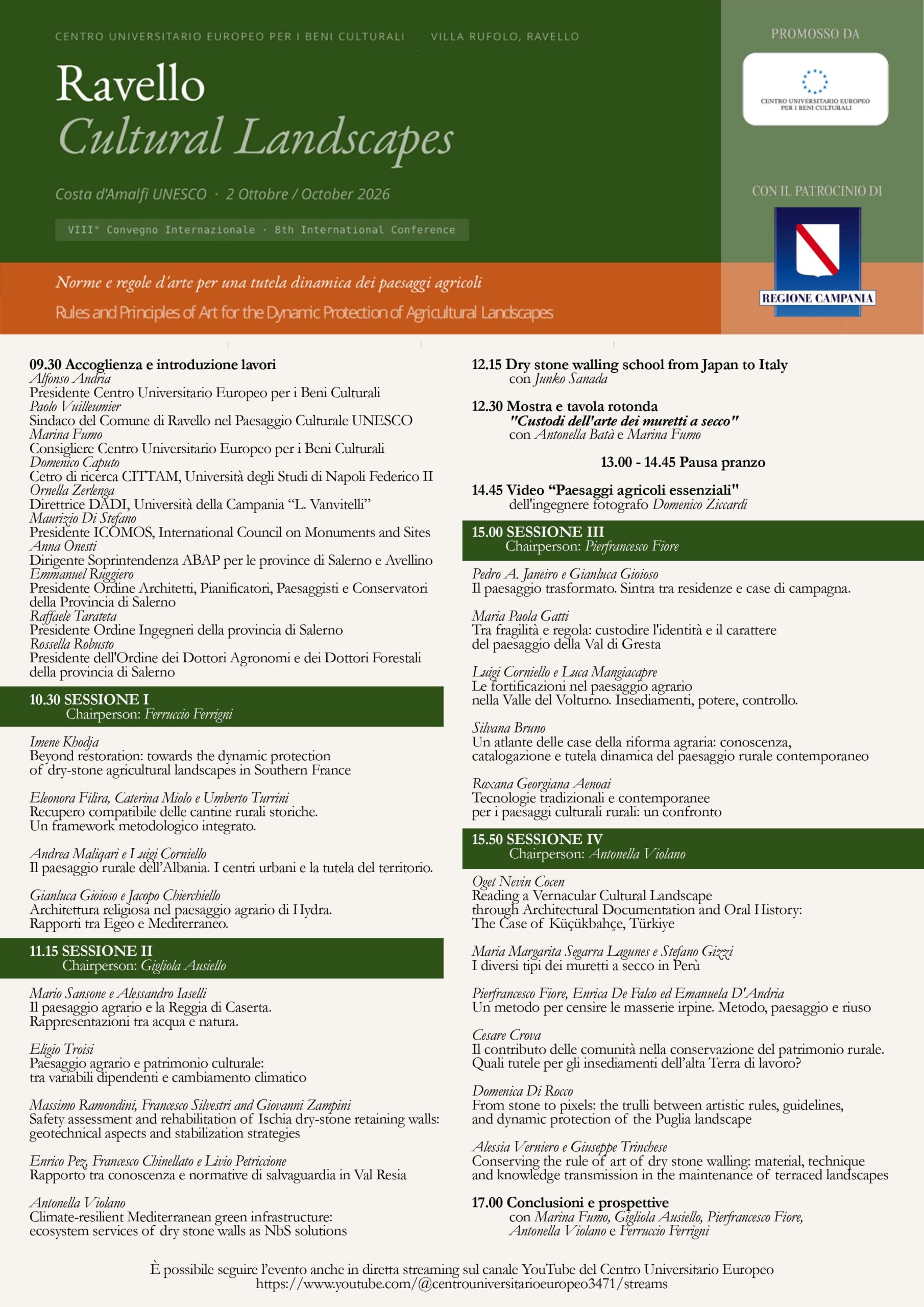
Standards and best practices for the dynamic protection of agricultural landscapes
Culture as a factor of development
- October 2, 2026
CITTAM, University of Naples Federico II, under the patronage of DICIV, University of Salerno
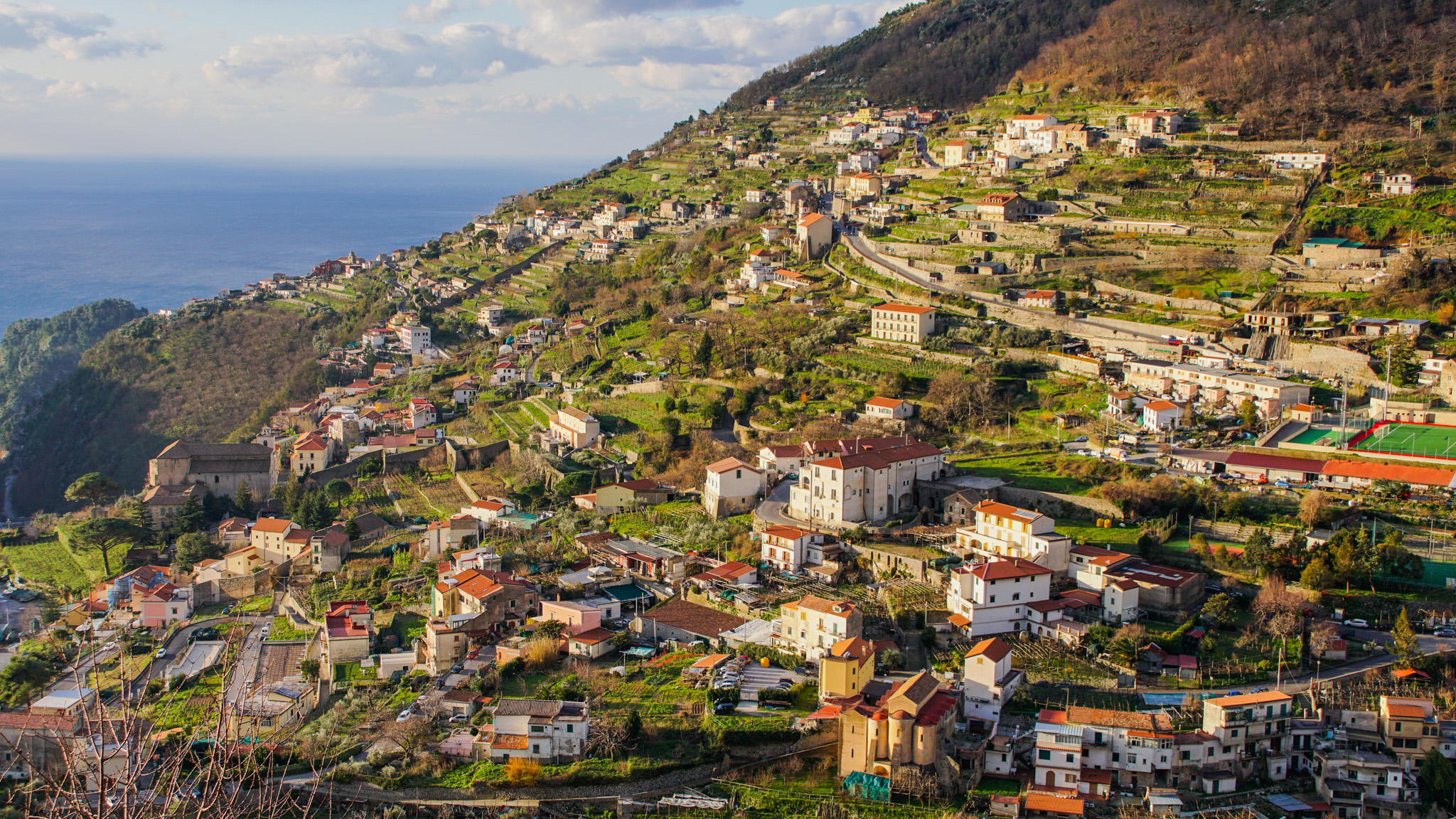
Promoted by the European University Centre for Cultural Heritage and CITTAM Federico II, the 8th “Ravello Cultural Landscapes” International Conference—dedicated this year to the theme “Standards and Best Practices for the Dynamic Protection of Agricultural Landscapes“—will take place in Ravello on October 2, 2026. It renews the annual opportunity to discuss and reflect on the management of high-value rural territories in the modern era. The UNESCO Cultural Landscape of the Amalfi Coast serves once again as an open-air laboratory where the agricultural economy blends with the site’s sublime beauty—a beauty born of land shaping and the creation of a landscape that currently faces a unique contradiction: on one hand, the land-adaptation “rules” that created this Cultural Landscape (techniques for land terracing, water management, crop selection, and rotation) are considered “Intangible Cultural Heritage of Humanity”; on the other, because these “rules” are not recognized by current regulations, they cannot be applied. The case of dry-stone walls is paradigmatic: these terrace-supporting structures—perfected over centuries of empirical observation and tested by dozens of earthquakes—can neither be newly built nor even repaired using traditional methods today, as they do not meet current regulatory standards. Indeed, repair work cannot be verified against the numerical parameters established by prevailing anti-seismic regulations.
The 2026 international conference invites scholars and public and private stakeholders to engage in a constructive debate on how to develop and refine standards that make the “rules” underlying agricultural landscapes verifiable. The aim is to ensure these areas are neither abandoned nor reduced to mere simulacra of a bygone lifestyle, but instead serve as active, dynamic testaments to new economies capable of safeguarding landscape and architectural heritage without sacrificing innovation in production processes or the collective enjoyment of our shared cultural legacy.
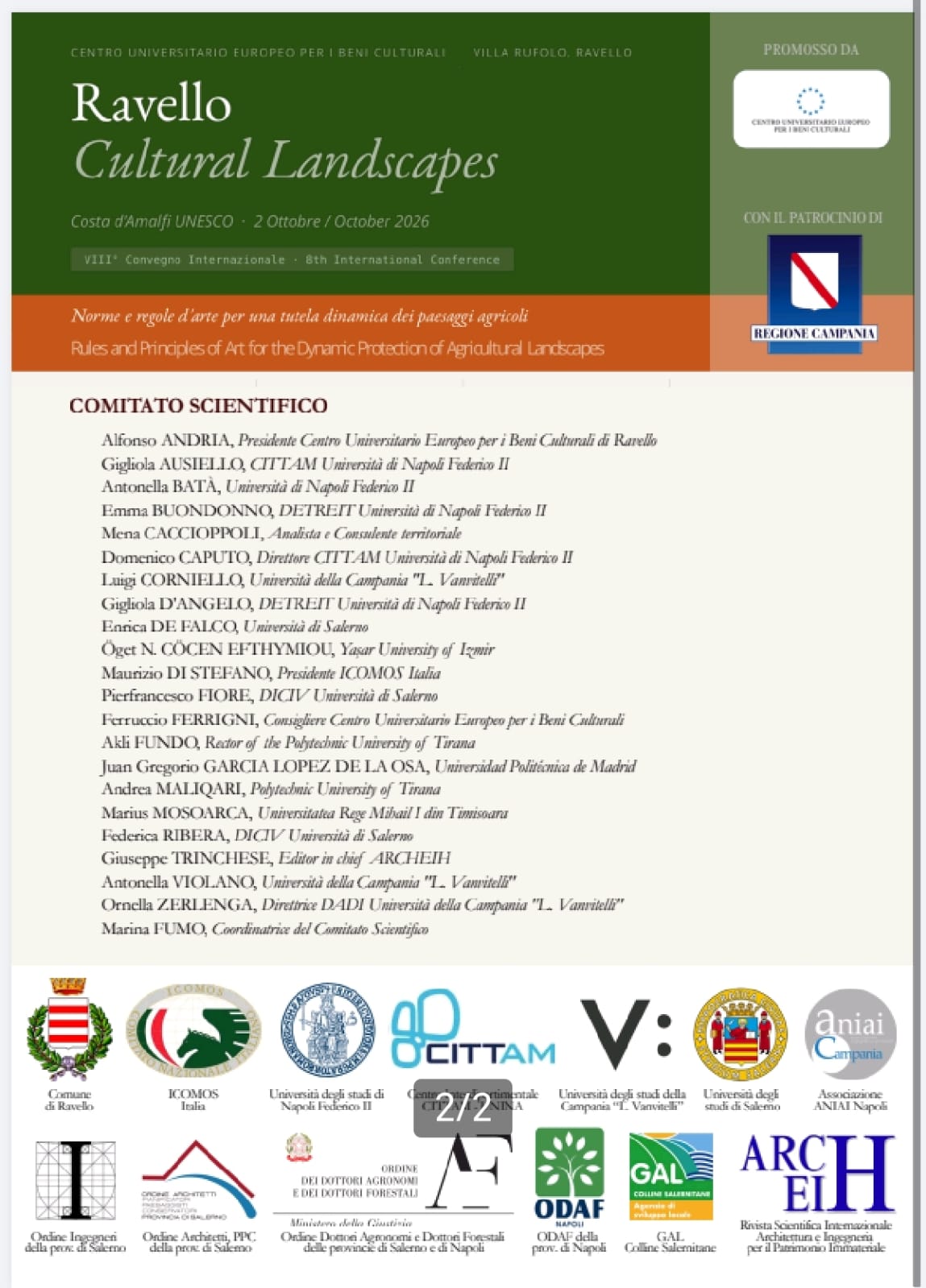
The scientific committee—comprising scholars from the European University Centre for Cultural Heritage in Ravello as well as the universities of Salerno, Naples Federico II, and Campania—invites those wishing to share successful local experiences and contribute ideas. It operates on the premise that an interdisciplinary debate—bringing together diverse areas of expertise and perspectives focused on the same subject—can yield a fruitful synthesis. This synthesis aims to outline new operational and regulatory guidelines to assist technical professionals and the institutions responsible for safeguarding rural areas, thereby helping to prevent their depopulation.