“TOURISM & CULTURE for the Regeneration of Places”
Tools and methods for cultural policies
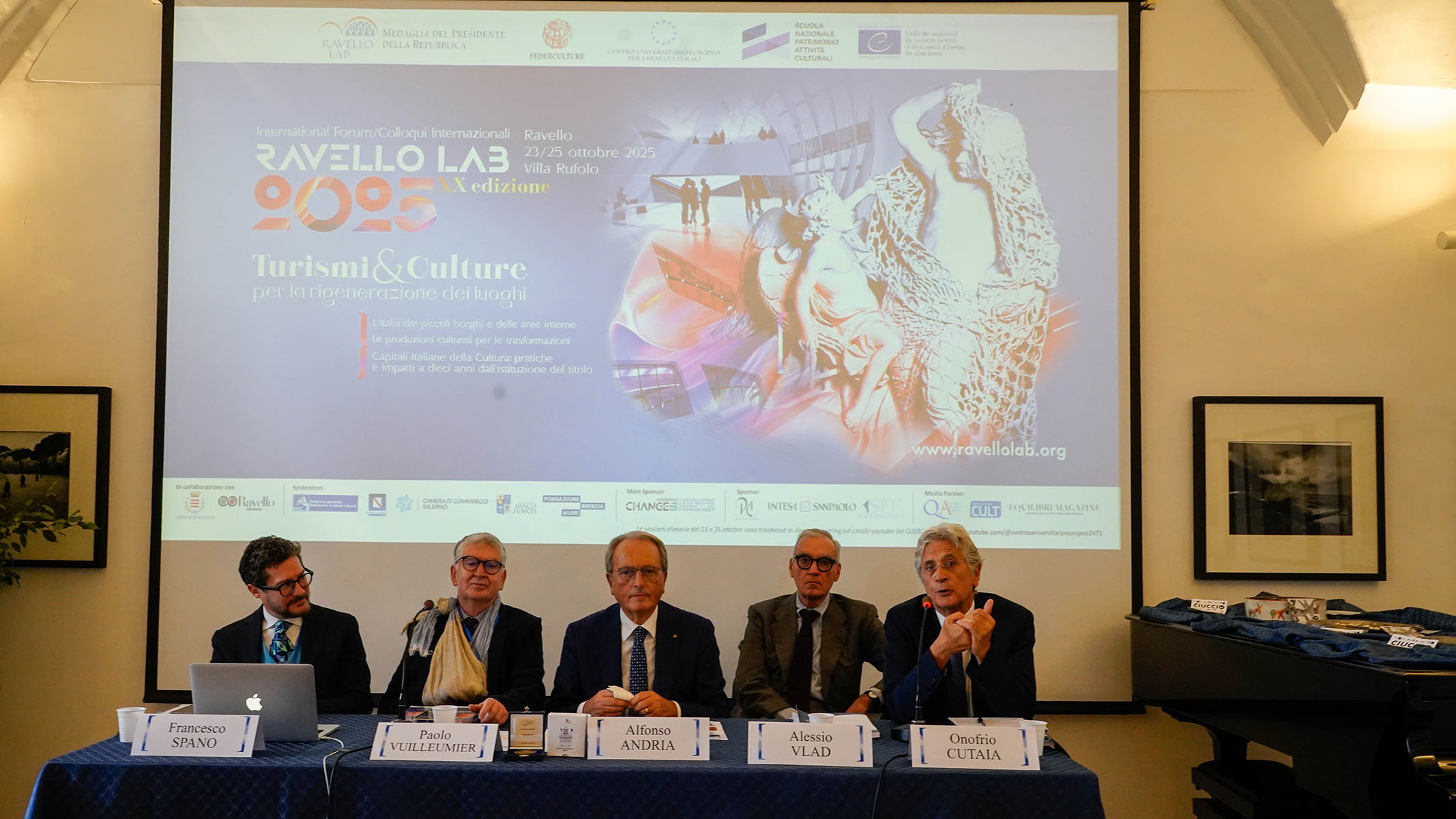
20th Edition of Ravello Lab - International Colloquia
- October 23–25, 2025
Federculture and the National School for Cultural Heritage and Activities
“The twentieth edition of Ravello LAB – International Colloquia took place in Ravello from 23 to 25 October 2025, focusing on the theme ‘Tourism & Culture for the Regeneration of Places’. Three intense days of work featuring cultural proposals capable of inviting people to listen and making themselves heard.”
“Ravello Lab 2025 was awarded the Medal of the President of the Republic, the prestigious recognition previously granted to the six preceding editions.”
“The event was promoted by the partnership comprising the European University Centre for Cultural Heritage in Ravello, Federculture, and the National School for Cultural Heritage and Activities. The initiative received the support of: the Campania Region, Fondazione Banco di Napoli, the Salerno Chamber of Commerce, the Ministry of Culture, Fondazione PandA, Fondazione Brescia Musei, Fondazione CHANGES, and SEF Consulting. It also benefited from the patronage of the General Secretariat of the Council of Europe, the University of Salerno, ANCI, the Conference of Regions and Autonomous Provinces, the Campania Region, UPI, the Province of Salerno, UNIONCAMERE, Fondazione Cassa di Risparmio Salernitana, the Municipality of Ravello, and Fondazione Ravello.”
Issue number 62 of the CUEBC online journal ‘TERRITORI DELLA CULTURA’ was entirely dedicated to Ravello Lab 2025, featuring reflections and in-depth analyses arising from the discussions held in Ravello.”
There were over 150 total participants, including 101 experts who provided their contribution to the inaugural session, the panels, and the closing round table.”
“The opening session, on Thursday, October 24th, was highly structured: following the greetings from the authorities, the floor was given to the institutional speeches by Dr. Rosanna Romano, General Director for Cultural Policies and Tourism of the Campania Region, and—via video link—the President of the National Tourism Agency, Alessandra Priante.”
“This was followed by in-depth insights into the PNRR Changes project with Prof. Diego Calaon from Ca’ Foscari University of Venice, and the greeting address by Paolo Diana, Regional Director for Enterprises in Campania at Intesa Sanpaolo.”
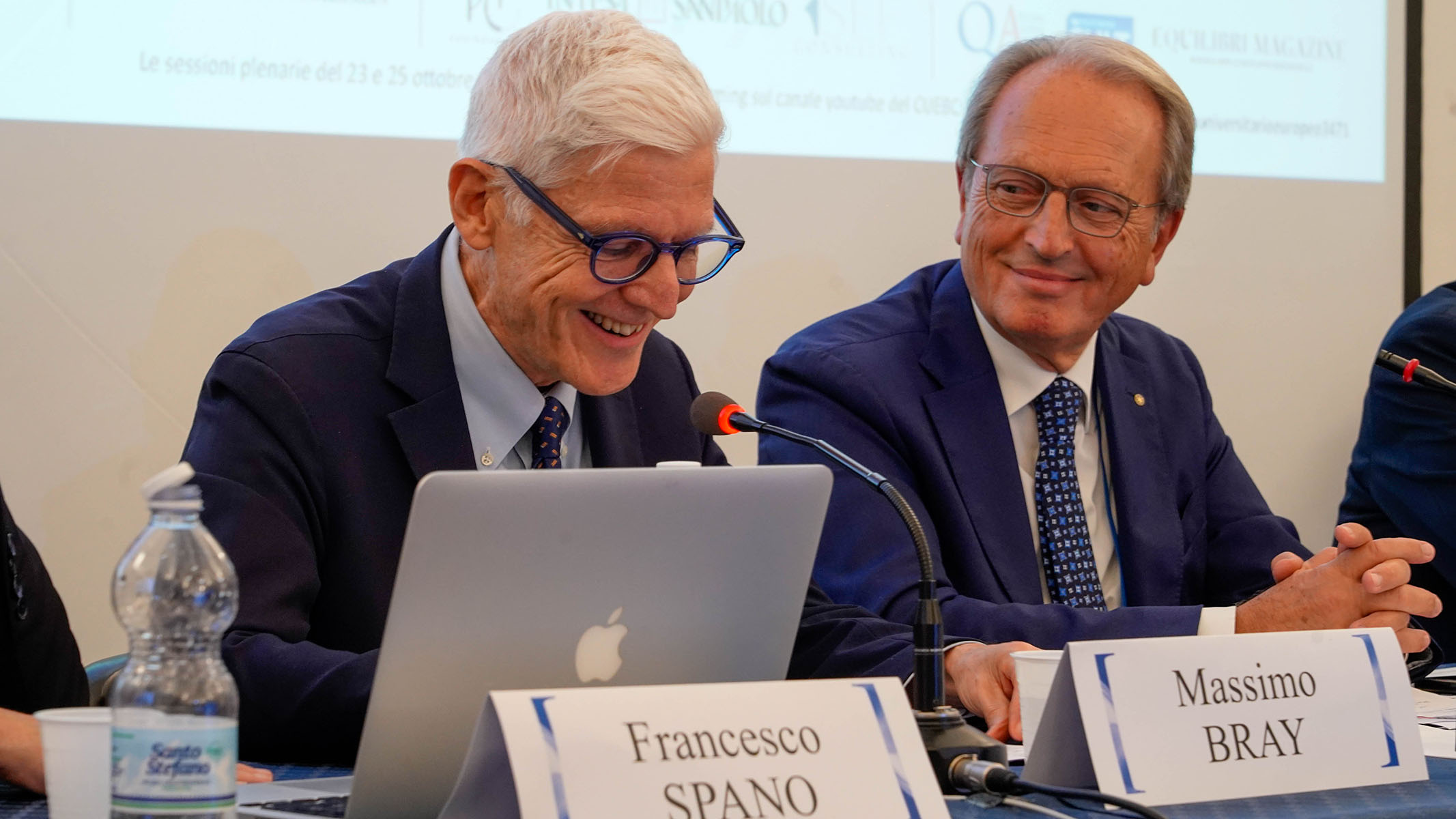
Next came the presentation of L’Aquila, Italian Capital of Culture 2026: Mayor Pierluigi Biondi, connected remotely, illustrated the program of activities for L’Aquila 2026. This was followed by an illuminating ‘lectio’ by Professor Massimo Bray, General Director of the Istituto della Enciclopedia Italiana Treccani, focused on the theme ‘Cultural Heritage between Valorization and Sustainability: New Challenges for 21st-Century Tourism’.”
“The day concluded with the award ceremony for the ‘Premio Nazionale Patrimoni Viventi’ (National Living Heritages Award) for the valorization of tangible and intangible cultural heritage 2025.”
The main day, Friday, October 23rd, was dedicated to thematic in-depth workshops:”
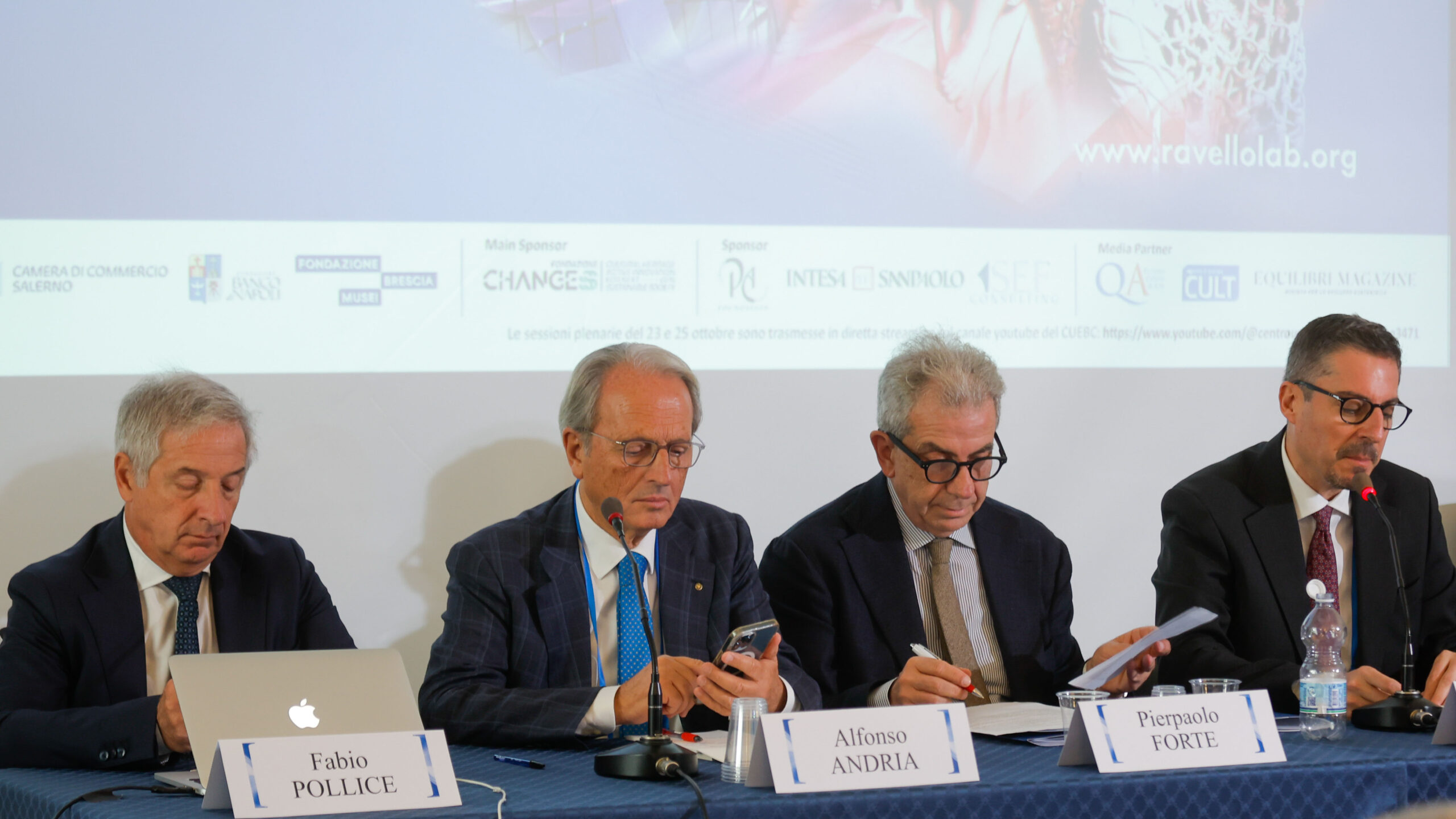
Panel 1 “The Italy of Small Villages and Inland Areas: A Heritage to Be Rediscovered.” Chairman: Fabio Pollice, Rector of the University of Salento
Panel 2 “Cultural Productions for Transformations.” Chairman: Pierpaolo Forte, Professor of Administrative Law at the University of Sannio
Panel 3 “Capitals of Culture: Impacts and Perspectives Ten Years After Their Establishment.” Chairman: Marcello Minuti, General Coordinator of the National School for Cultural Heritage and Activities.
“On Saturday, October 25th, the proceedings of Ravello Lab 2025 drew to a close.”
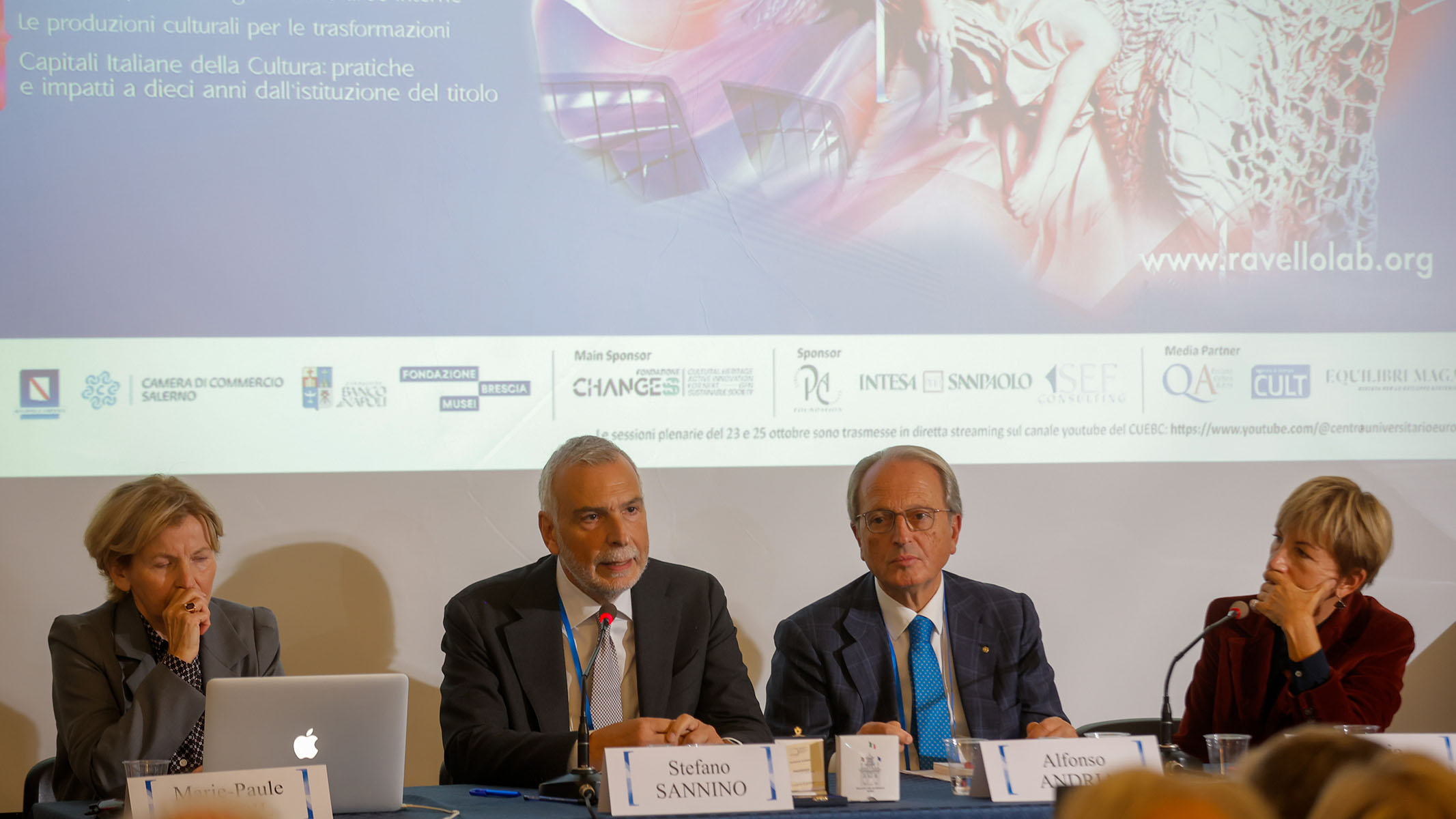
“The day opened with a discussion on the theme ‘The transformation of the museum into a functional autonomy of culture and territory’, promoted for Ravello Lab by the Fondazione Brescia Musei. Subsequently, the three chairs of the respective panels presented an initial draft of the Recommendations that emerged from the reflections generated within the workshops. At the conclusion of the morning, the final round table was held, introduced and coordinated by LA7 Journalist Flavia Fratello. The session was attended in person by Alfonso Andria, President of the Ravello Lab Management Committee and of the European University Centre for Cultural Heritage; Felice Casucci, Regional Minister for Administrative Simplification and Tourism of the Campania Region; Daniela Picconi, Vice President of Federculture; and Marie-Paule Roudil, Vice President of CUEBC, former Director of the UNESCO Office in New York and UNESCO Representative to the United Nations. Mario Anzil, Vice President of the Regional Council and Regional Minister for Culture of the Friuli Venezia Giulia Region, intervened with a specially prepared video message. The closing remarks were delivered by Stefano Sannino, Secretary-General of the European External Action Service.”