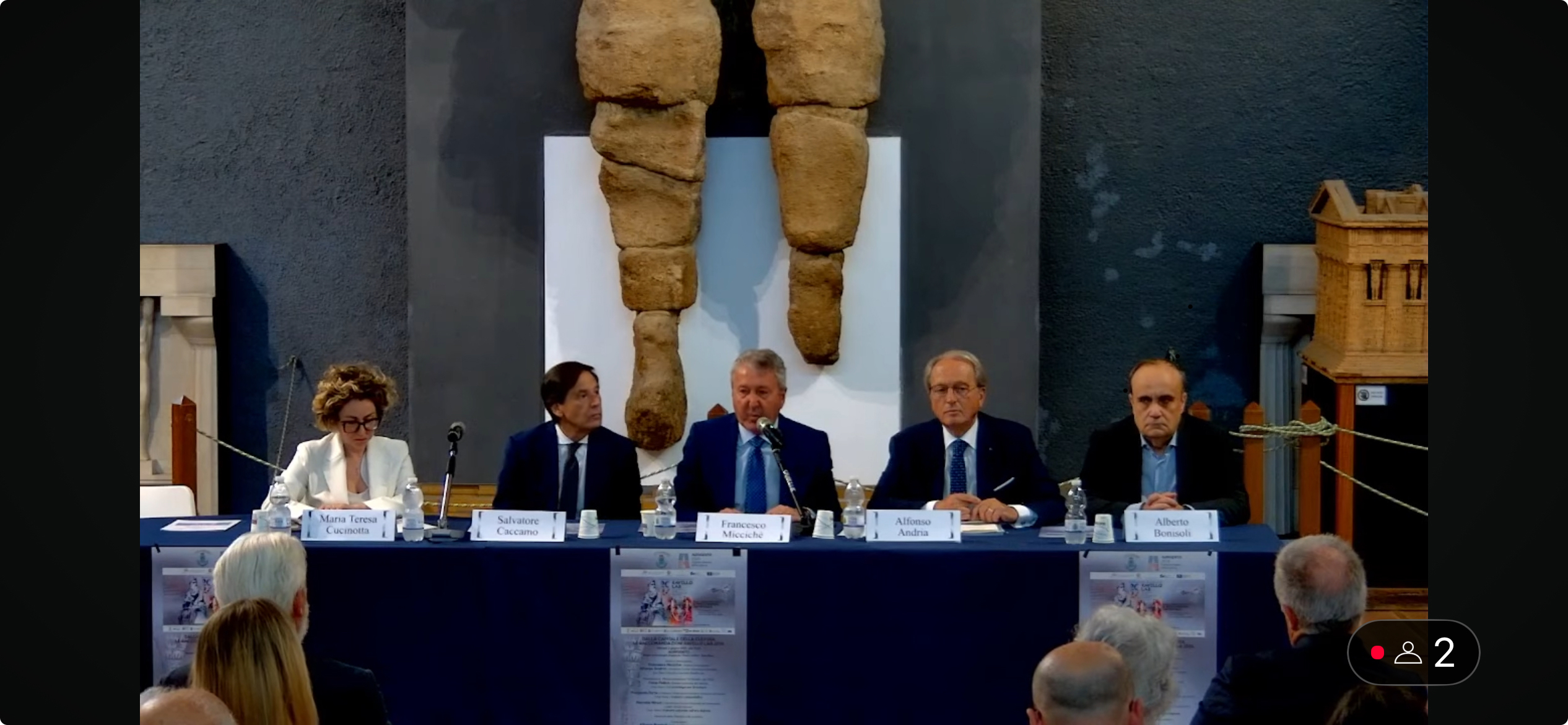
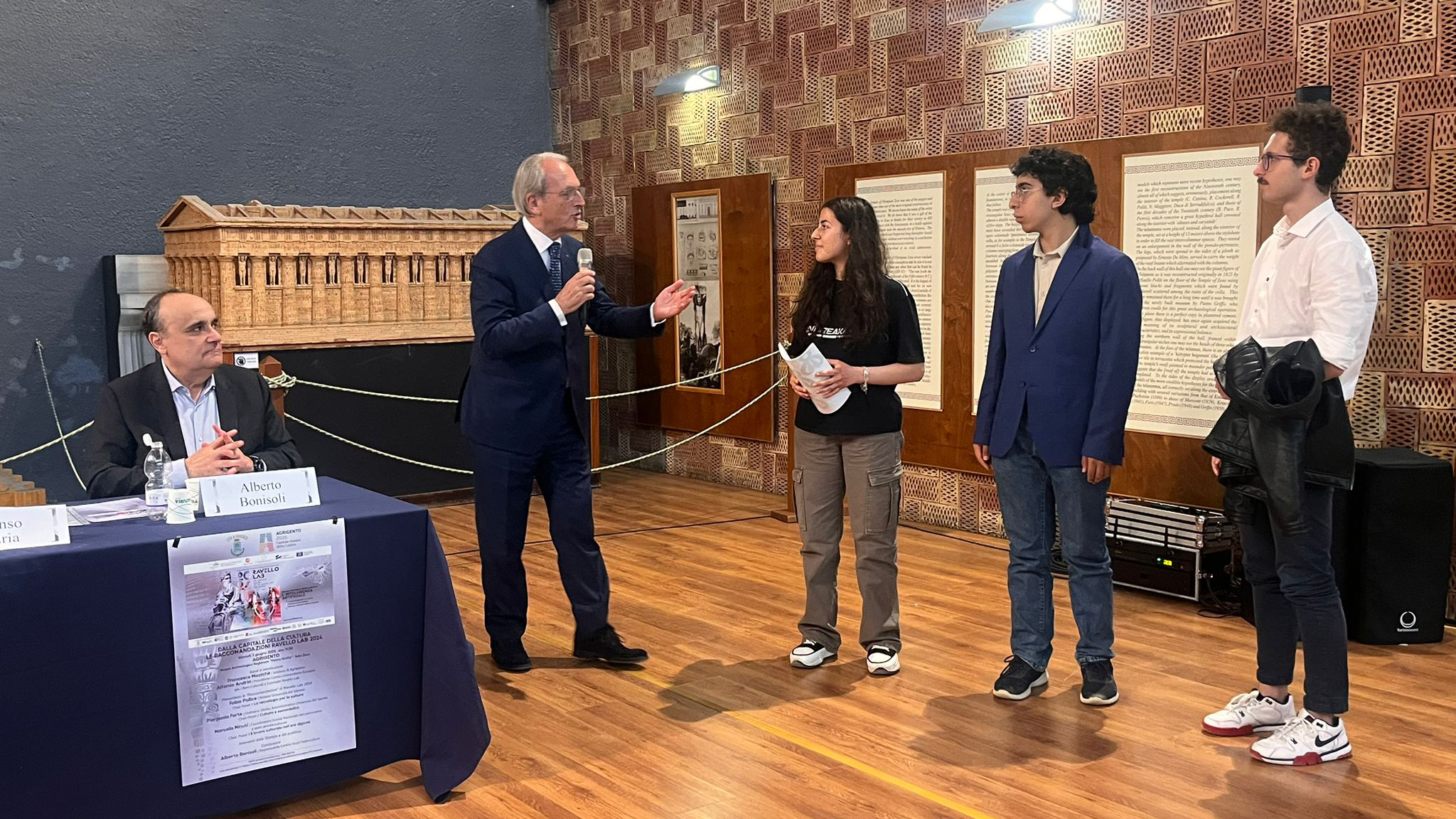
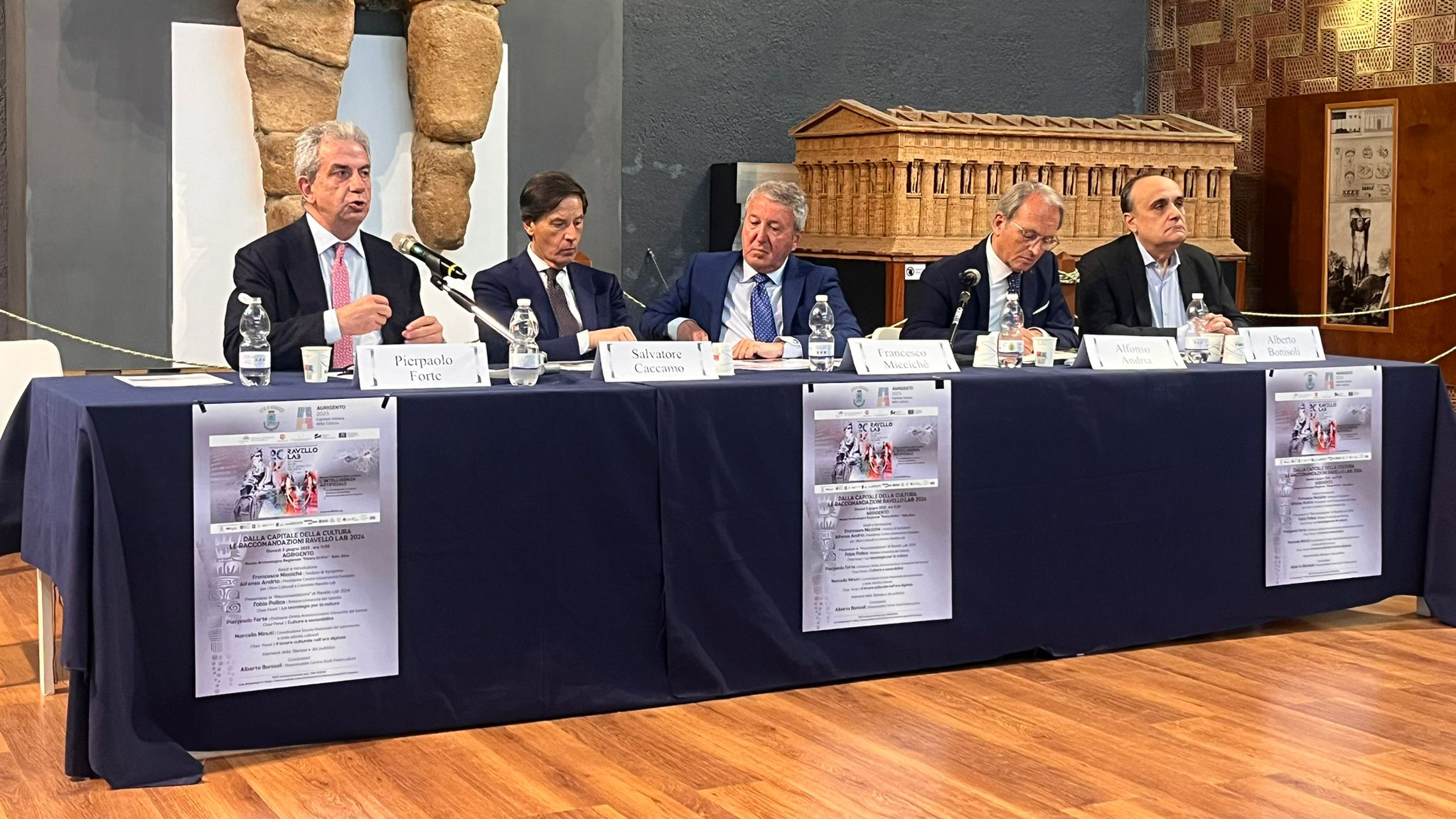
The Ravello Lab 2024 Recommendations in Agrigento
Tools and methods for cultural policies
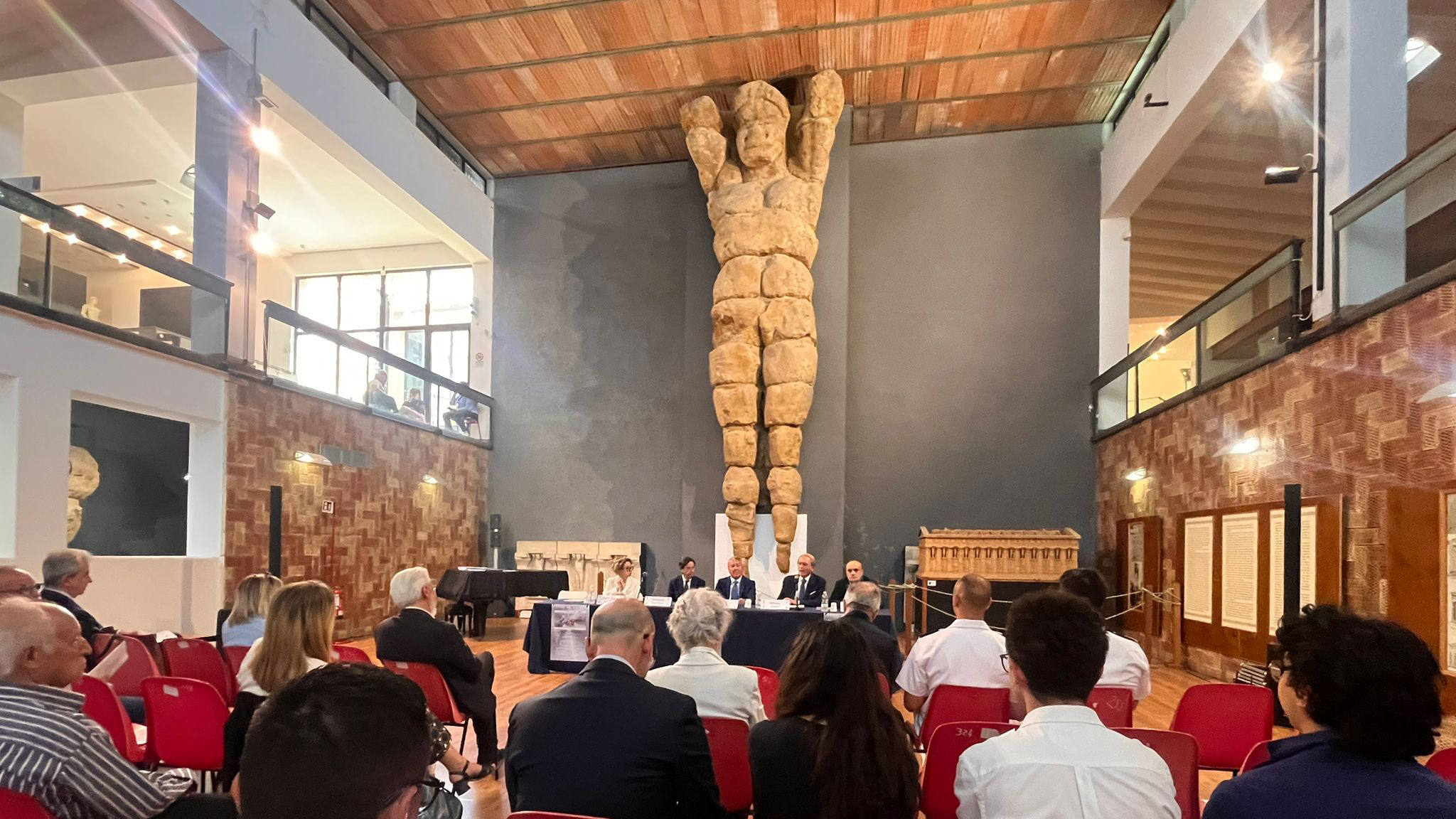
As part of the collateral events for Agrigento, Italian Capital of Culture 2025, set against the magnificent backdrop of the “Pietro Griffo” Regional Archaeological Museum.
- June 5, 2025
Municipality of Agrigento
The initiative was promoted by Federculture, the National School of Cultural Heritage and Activities, and the European University Centre for Cultural Heritage (Ravello). They were represented in Agrigento, respectively, by Alberto Bonisoli, Head of the Federculture Study Centre and former Minister of Cultural Heritage and Activities; Fabrizio Pedroni, Head of Digital Education & Training at the National School of Cultural Heritage and Activities; and Alfonso Andria, President of the Ravello Centre and the Ravello Lab Committee.
For the 2024 edition of Ravello Lab—titled “New Frontiers of Culture: Artificial Intelligence”—public and private stakeholders, local and regional administrators, experts, and scholars (organized into three thematic panels: 1. “Technology for Culture,” 2. “Culture and Sustainability,” and 3. “Cultural Work in the Digital Age”) produced a set of recommendations for decision-makers and cultural professionals, which the respective chairs summarized during the meeting in Agrigento.
Fabio Pollice, Rector of the University of Salento and coordinator of the first panel, highlighted the importance of the reciprocal relationship between technology and culture, taking the connection between the two as his starting point. While technology can support cultural development, culture must also guide technological innovation. The goal is to use technology to enhance societal well-being and support sustainable development—leveraging and preserving cultural heritage while fostering human creativity.
Next up was Pierpaolo Forte, Professor of Administrative Law at the University of Sannio and Chair of Panel 2, who summarized the 2024 recommendations into a few key points. Culture and citizenship: cultural heritage shapes identity and the evolution of citizenship; territorial regeneration: new tools for territorial governance are needed to distribute visitor flows and revitalize cities and inland areas; cultural sustainability: resources and support must be sought to ensure the sustainability of culture, including through improved workforce management within cultural organizations and collective bargaining.
The findings of Panel 3, “Work in the Digital Age”—coordinated by Marcello Minuti, Director of the National School of Cultural Heritage and Activities—were presented by Fabrizio Pedroni, the School’s Head of Digital Education & Training. The panel addressed the impact of technology and AI on cultural work, highlighting the need for training that is both adequate and up-to-date to successfully integrate AI into cultural professions. It is important to foster a “digital mindset” and acknowledge the role of creative professionals in driving innovation. Furthermore, collaboration between public and private sectors is essential to ensure the sustainability of technological solutions, encouraging the use of AI to streamline administrative processes and open up access to research data. Finally, the digital upskilling of cultural professionals must begin with foundational education—specifically at the primary and secondary school levels.
Speakers included the Mayor of Agrigento, Francesco Miccichè; Prefect Salvatore Caccamo; the Vice-President of the “Agrigento 2025” Foundation, Vincenza Gaziano; and Margherita Orlando, author of the bid dossier that led to Agrigento securing the title of Capital of Culture for 2025.
The concluding remarks were delivered by Alberto Bonisoli, Head of the Federculture Research Centre and former Minister of Cultural Heritage and Activities.