Conference “Ravello Lab 17th Edition: Culture and Democracy”
Tools and methods for cultural policies
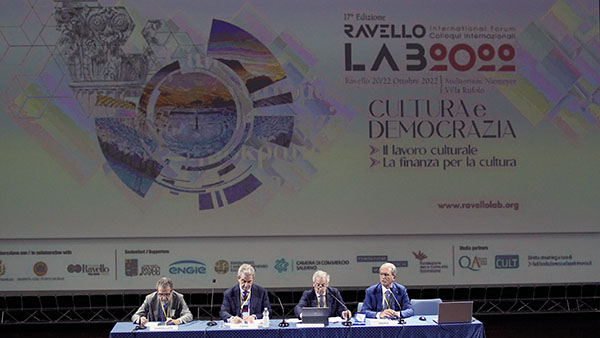
Conference "Ravello Lab 17th Edition: Culture and Democracy"
- October 20–22, 2022
Federculture and the School of Cultural Heritage and Activities Foundation
The seventeenth edition of Ravello Lab – International Colloquia—a European forum promoted by Federculture, the European University Centre for Cultural Heritage, and the Foundation of the School of Cultural Heritage and Activities—focused on the central theme of “Culture and Democracy.” Discussions within two thematic workshops (dedicated respectively to cultural work and finance for culture) stemmed from this theme, leading to the drafting of a preliminary set of recommendations.
Ravello Lab opened with a minute of silence in memory of Yuriy Kerpatenko—the Ukrainian conductor of the Kherson Philharmonic and a “martyr for culture”—who was brutally killed after refusing to perform for Moscow. During the closing session on October 22, moderated by *Il Mattino* editor-in-chief Francesco de Core, participants extended their best wishes to the new government, and specifically to the newly appointed Minister of Culture, Gennaro Sangiuliano.
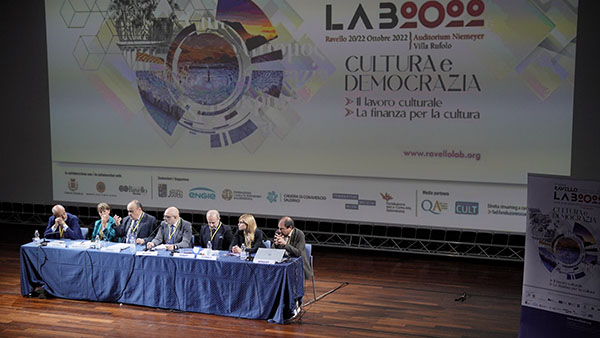
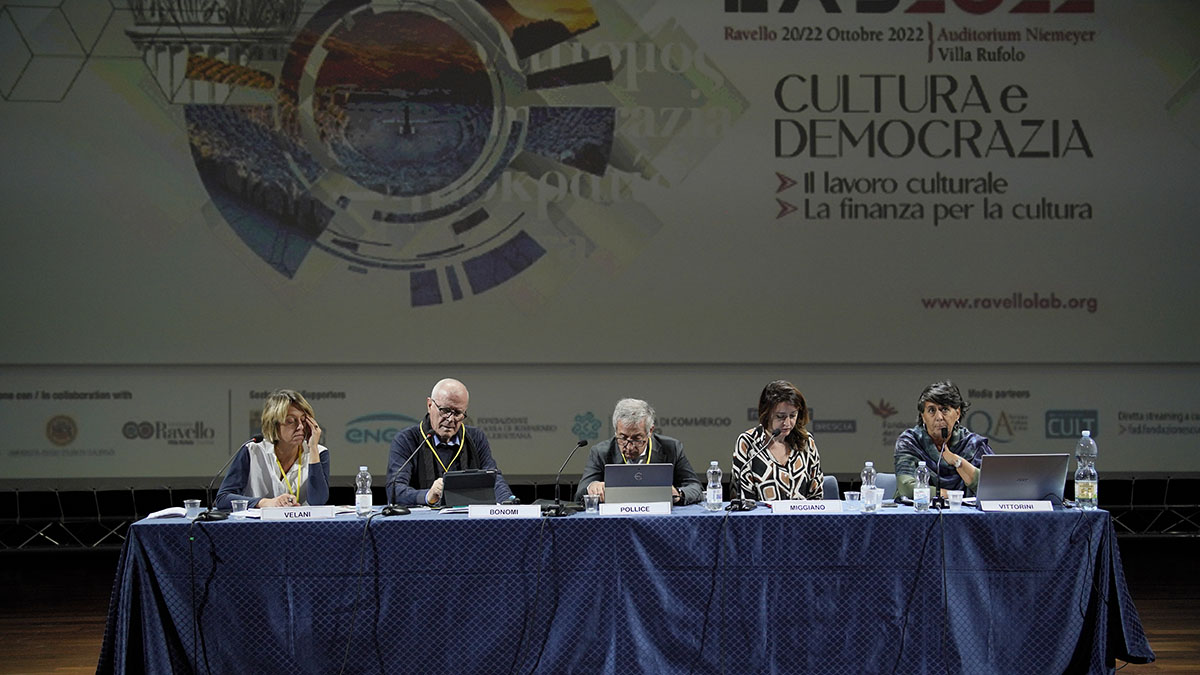
Held across the “Oscar Niemeyer” Auditorium and Villa Rufolo, this three-day forum for ideas and proposals generated a series of recommendations aimed at revitalizing the strategic cultural and creative industries sector.
Ravello Lab serves as a cutting-edge hub for developing proposals and territorial development policies designed to enhance cultural heritage and support creative industries. Once again, the event’s established format brought together experts, administrators, scholars, and industry professionals to examine pressing sector issues and contribute to redefining public policies centered on the relationship between culture and development.
This edition focused particularly on the concept of culture as a tool for cohesion, fostered by reclaiming a sense of community and identity. This highlights the link between culture and democracy—addressing the increasingly prominent cultural diversity within European societies and standing against discrimination in all its forms.
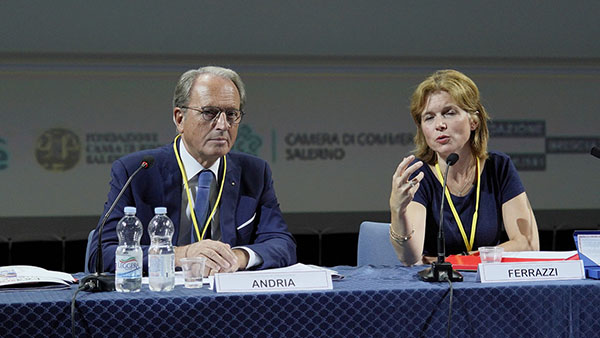
Among the numerous speakers and participants at Ravello Lab 2022 were former Minister of Cultural Heritage and Activities Alberto Bonisoli; Claudia Ferrazzi, former advisor on culture and audiovisual affairs to French President Macron; Vincenzo Trione, President of the School of Cultural Heritage and Activities Foundation (joining via video link); Francesca Bazoli, President of the Brescia Musei Foundation—who, together with Stefano Baia Curioni (a Bocconi University professor and the project’s author, joining remotely), presented the bid for Brescia and Bergamo to become the 2023 Capital of Culture; Antonio Parenti, Head of the European Commission Representation in Italy; and Tiziana D’Angelo, Director of the Archaeological Park of Paestum and Velia.
The event was held in partnership with the Campania Region, Fondazione Banco di Napoli, Engie, Fondazione Cassa di Risparmio Salernitana, Fondazione Scuola Beni e Attività Culturali, the Salerno Chamber of Commerce, Fondazione della Comunità Salernitana, and the Ministry of Culture (Circular 108).
It also secured the patronage of the General Secretariat of the Council of Europe, MiC, ANCI, the Conference of Regions, the Campania Region, UPI, the Province of Salerno, UNIONCAMERE, the Municipality of Ravello, and the Ravello Foundation.
Each edition of Ravello Lab benefits from significant media coverage, thanks to a dedicated press office and high-quality media partnerships.
The plenary sessions were live-streamed via fad.fondazionescuolapatrimonio.it, while the two panels were broadcast on the European University Centre for Cultural Heritage’s Facebook page, where they remain available for viewing (https://www.facebook.com/Centro-Universitario-Europeo-per-i-Beni-Culturali-169944143173661).
Issue No. 50 of the CUEBC online journal *Territori della Cultura* is dedicated to Ravello Lab 2022 and features reflections and in-depth analyses stemming from the discussions held in Ravello.
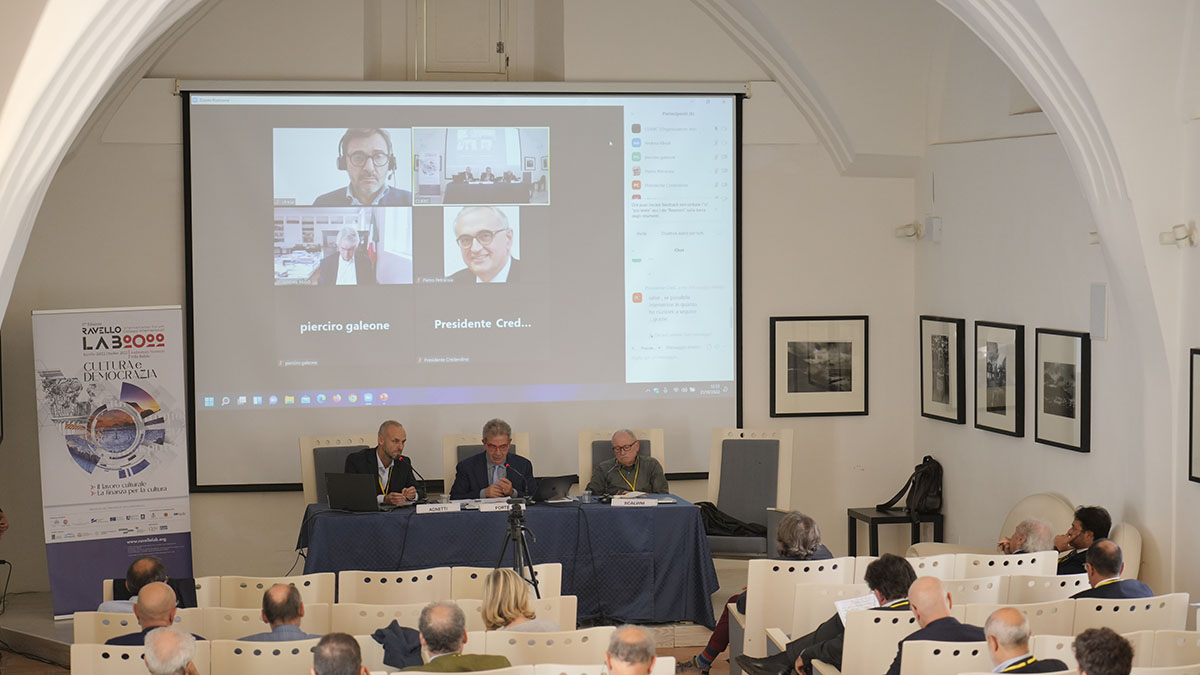
There were 112 participants—including 12 joining remotely via Zoom—with 84 experts contributing to the opening session, the panels, and the concluding round table. Approximately 200 viewers registered on the School of Cultural Heritage and Activities Foundation’s online learning portal, while around a thousand followers tuned in to the live Facebook broadcast.