Amalfi Coast UNESCO Site Management Plan
Culture as a factor of development
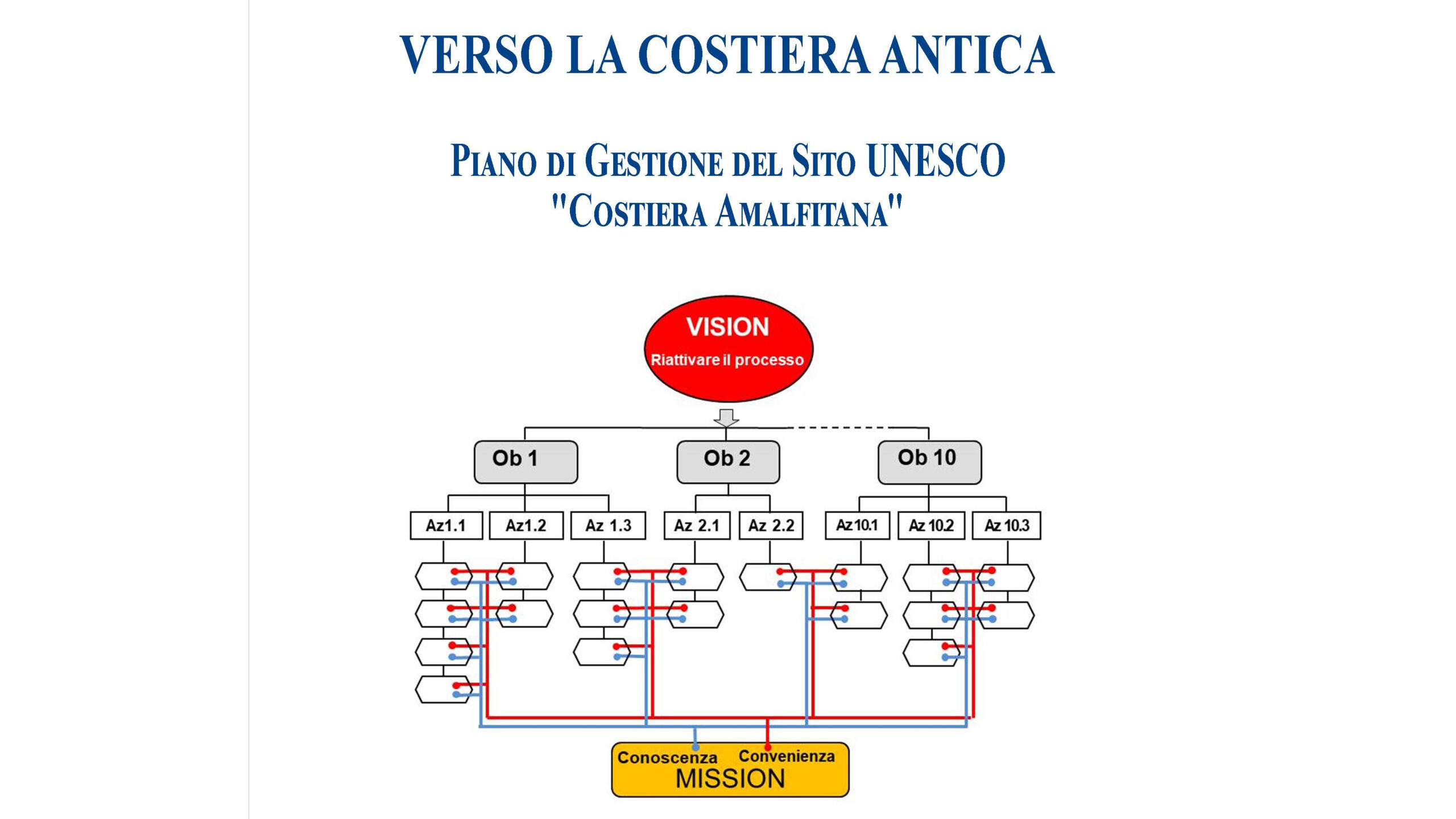
Towards the Ancient Coast
- 2005-2019
Superintendency for Architectural and Landscape Heritage of Salerno and Avellino and the Monti Lattari Mountain Community
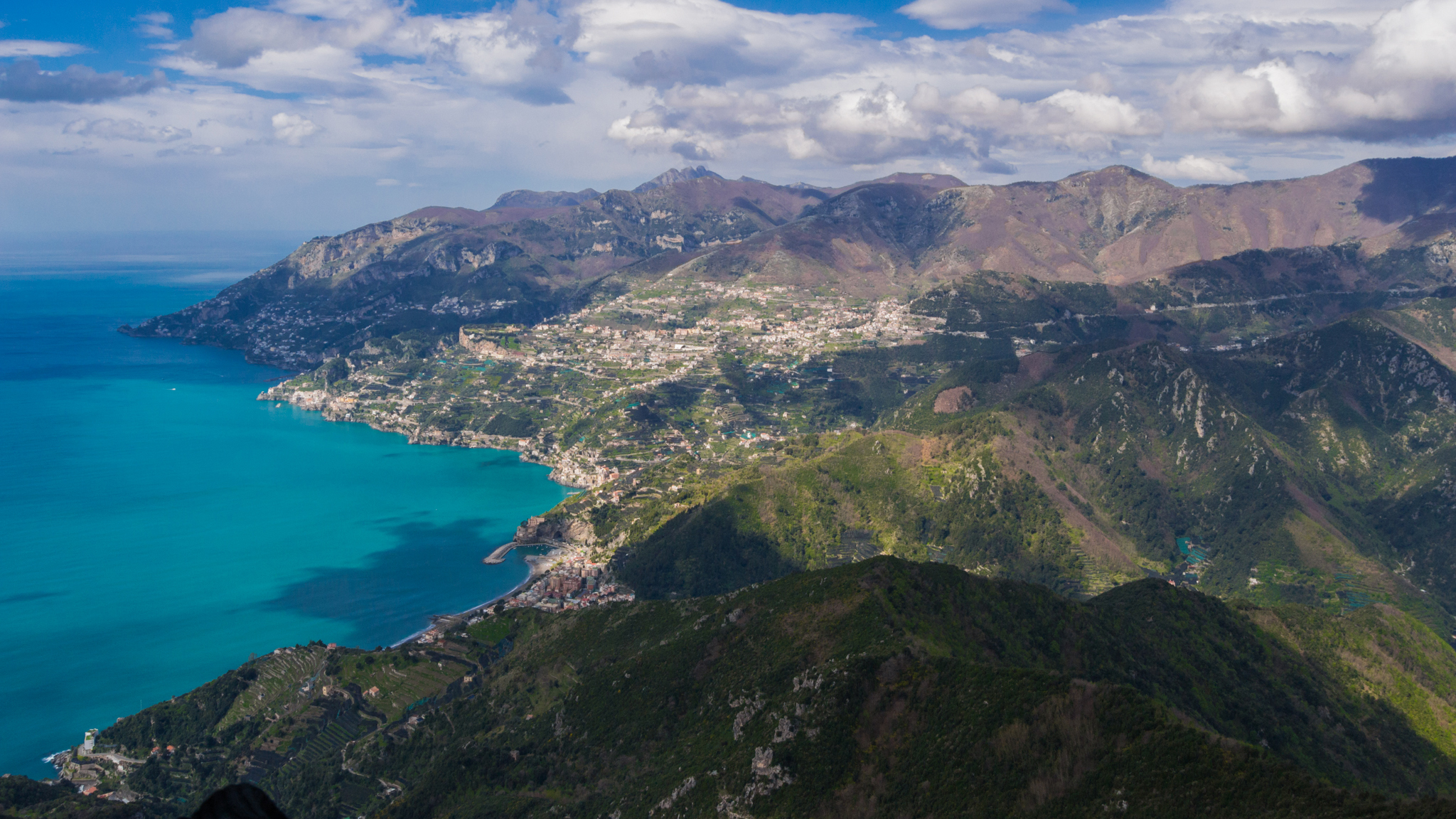
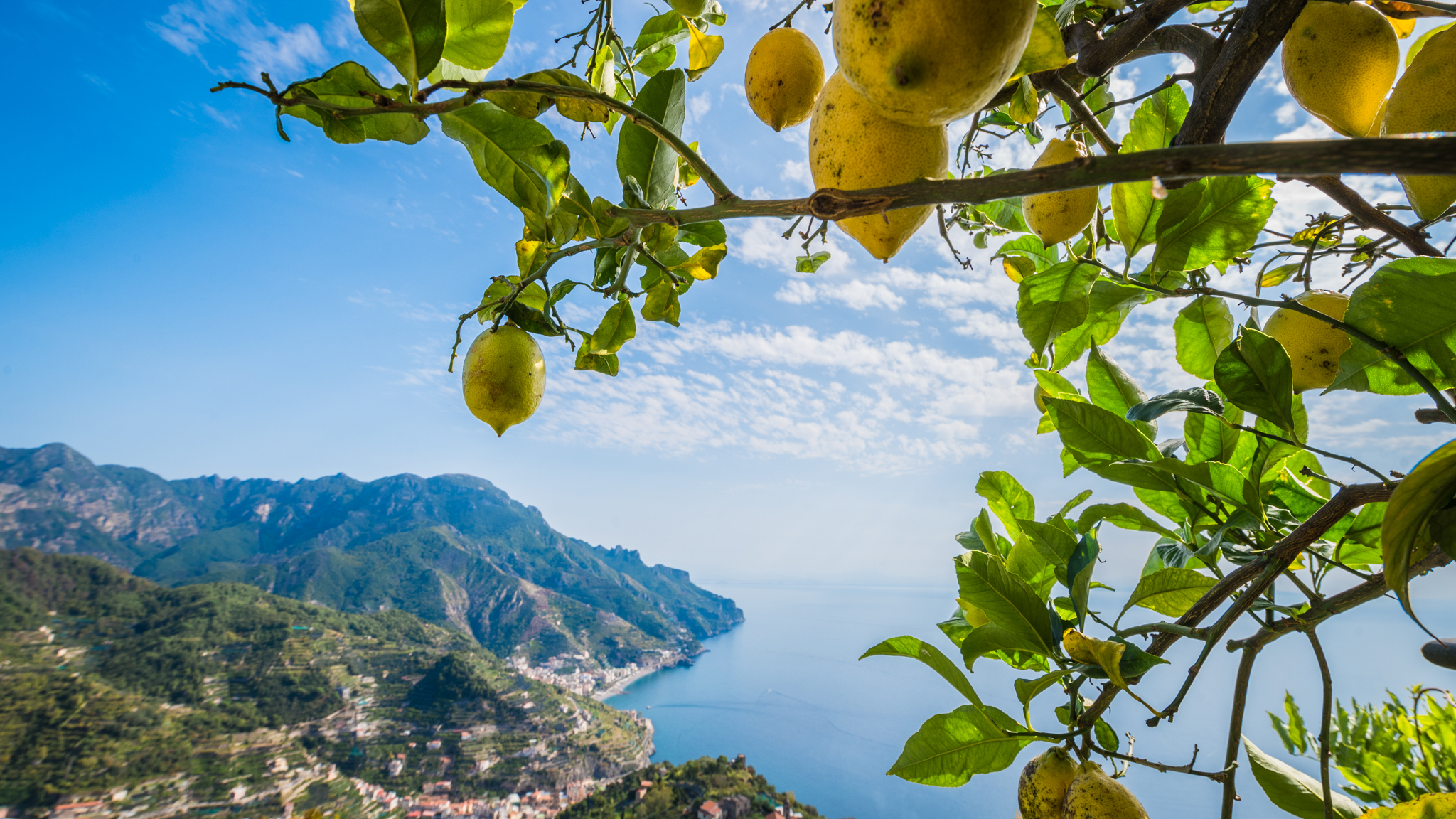
The Amalfi Coast was inscribed on the UNESCO World Heritage List (WHL) in 1997 under the “Cultural Landscape” category, as it “is an outstanding example of a Mediterranean landscape, with exceptional scenic, natural, and cultural value, resulting from its dramatic topography and historical evolution” (criteria ii, iv, and v).
The then-Superintendency for Architectural and Landscape Heritage for the provinces of Salerno and Avellino and the Amalfi Peninsula Mountain Community (now dissolved and replaced by the Monti Lattari Mountain Community) first signed a memorandum of understanding and subsequently provided concrete support—initially for preliminary studies and later for the drafting—of the Management Plan (MP). This plan was commissioned by the Ministry of Cultural Heritage and Activities to align sites inscribed on the World Heritage List (WHL) with UNESCO directives. Commissioned by these bodies, the European University Centre for Cultural Heritage in Ravello established a Working Group (WG) comprising scholars from Italian universities (Federico II University, Second University of Naples, Roma Tre University, University of Salento), national research institutions (CNR IRAT and IAMC), and the UNESCO advisory body ICOMOS. The WG conducted the preliminary studies and drafted an initial version of the MP, ultimately producing the final version and submitting it to local mayors and stakeholders.
The “Amalfi Coast” Management Plan was thus launched with a clear vision: to reactivate the process of intelligently and compatibly adapting the territory to the needs of the community that uses it. “Towards the Ancient Coast” (*Verso la Costiera Antica*) is the slogan that defines this initiative.
The methodological aspects of this approach, the critical issues to be resolved (the nature of the cultural landscape as a public good that is nonetheless generated and utilized by private entities; potential agricultural support policies based on balancing benefits with the tourism activities the sector stimulates; and methods for utilizing renewable energy sources in a territory that exemplifies their intelligent historical use yet cannot withstand their intrusive nature today), as well as the analysis of governance models and Management Plans for other Italian and European cultural landscapes, were discussed in the volume *Il futuro dei territori antichi – problemi, prospettive e questioni di governance dei paesaggi culturali evolutivi viventi* (“The Future of Ancient Territories: Problems, Prospects, and Governance Issues Regarding Living, Evolving Cultural Landscapes”), published in the Center’s “Territorio storico e ambiente” (Historic Territory and Environment) series.
In September 2019, the Centre published the Management Plan. Its structure comprises a first part outlining the characteristics of the system to be managed and the associated governance issues, and a second part detailing the planned interventions. This second part forms the core of the Management Plan; its 66 interventions operationalize the 36 actions required to achieve the 10 strategic objectives. Each proposed intervention is described in a detailed data sheet outlining its structure and content—such as purpose, components, expected results, stakeholders, and costs—and linking them to the specific actions and objectives they address. Each sheet highlights aspects of interest to the policymakers responsible for implementation: priority, duration, and costs (essential for creating a reliable timeline); and the impact on the territory (regarding the landscape) and the community (in terms of both accessibility and potential public support or opposition). The data sheet also includes success indicators, which are crucial for effective, tangible monitoring. Finally, the plan presents a timeline for the actions, monitoring criteria, the schedule for any future revisions, and estimated costs.
The results of studies and research delving into certain critical issues analyzed in the Management Plan are presented separately in a standalone document. Consequently, the eight appendices illustrating these findings are not part of the Plan itself. The authors offer them as material to spark discussion regarding the effectiveness of the proposed measures, their feasibility, and their impact on the landscape.