International Seminar “Diagnostics, Conservation, and Protection: Leonardo’s Drawings”

Knowledge of Cultural Heritage
International Seminar “Diagnostics, Conservation, and Protection: Leonardo’s Drawings”

International Seminar “Diagnostics, Conservation, and Protection: Leonardo’s Drawings”

Central Institute for the Restoration and Conservation of Archival and Library Heritage
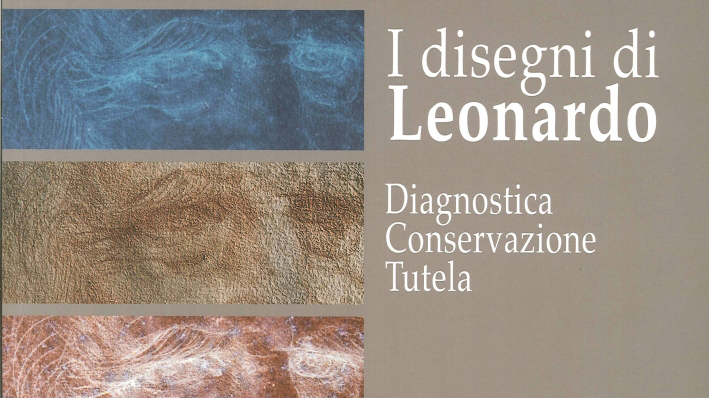
On March 20, 2012, at the ICRCPAL (Central Institute for the Restoration and Conservation of Archival and Book Heritage) in Rome, preliminary results were shared regarding a series of complex, non-destructive diagnostic and analytical tests performed on Leonardo’s *Self-Portrait*. That event set the stage for an international workshop held on June 25 and 26—organized by the ICRCPAL and the European University Centre for Cultural Heritage—focusing on the diagnostics, conservation, and protection of Leonardo’s drawings. The aim of the analyses and the various presentations at the seminar was to clarify lingering questions regarding the origins of the damage and the processes of its progression. Indeed, the *Self-Portrait* exhibits “widespread fading of the graphic marks, extensive foxing, darkening of the paper support, and the presence of adhesive along the entire perimeter of the sheet’s verso.” Given the extreme fragility of the paper support, the goal was to propose hypotheses for a “conservative restoration”—one capable of preserving the characteristics that define the drawing’s history and identity without altering them. In the conclusions regarding the *Self-Portrait’s* conservation—presented at a press conference on June 26 by ICRCPAL Director Maria Cristina Misiti—it is noted that “treatments that stabilize the work without radically altering its appearance generally meet with unanimous approval. Conversely, conservative treatments that change the appearance of a famous work of art usually draw heavy criticism, regardless of whether they are right or wrong. Many people have grown accustomed to the way Leonardo’s *Self-Portrait* looks—stains and all. Altering its appearance in any way is bound to spark controversy.”The advantages of a conservation intervention must be carefully considered. Do we know enough about this work—regarding its authenticity, the model used, and potential connections to other pieces? Might we inadvertently compromise crucial material information that could prove useful in the future for answering fundamental questions about this drawing and its possible links to other works? This point was reiterated by the director, who emphasized that before taking any action on the drawing, it is essential to “know Leonardo,” since “one cannot ‘restore’ something one does not understand. Indeed, this is the first time the Self-Portrait has been examined so closely.” Hence the need for caution and “further close-up study,” she added. “We actually have far more questions now than we did three months ago—questions that still require answers. We need to proceed with diagnostic testing and research, which will be carried out in Turin.” Speaking of Turin, Mario Turetta—Regional Director for Cultural Heritage and Landscape in Piedmont—confirmed that the Directorate is working on the *Polo Reale* (Royal Complex) project in Turin. This cultural initiative, a collaboration between the Piedmont Region and the City of Turin, is scheduled to open in late 2014 and will unite the Royal Palace, the Galleria Sabauda, ​​the Museum of Antiquities, the Royal Armory, and the Royal Library. This could provide an opportunity to exhibit the Self-Portrait once again; for the time being, it has returned to the “bunker room” built in the 1990s. “We are working on creating a space—secure yet more spacious—that will allow for more continuous display and accommodate larger numbers of visitors. Just as the Louvre has the *Mona Lisa*, the *Polo Reale* will feature Leonardo’s Self-Portrait—though, of course, we must always bear in mind that it can only be exhibited for a limited period.” That period, according to the concluding remarks, should not exceed 14 weeks, with careful attention paid to all associated risks of stress to the artwork.