Conference “Faro Convention and Sustainable Development Goals”
Knowledge of Cultural Heritage
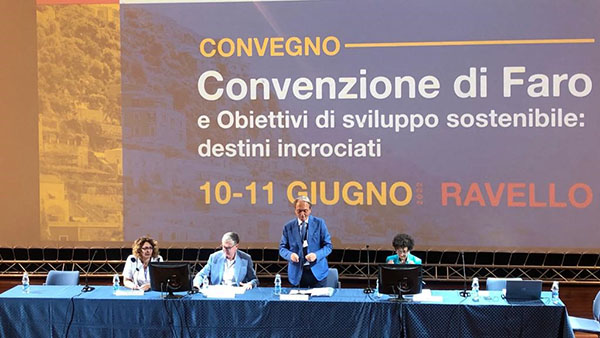
The Faro Convention and the Sustainable Development Goals: Intertwined Destinies
- June 10–11, 2022
The conference fostered constructive public reflection on potential avenues for developing and integrating activities to implement the Faro Convention, as well as on the value of cultural heritage in enhancing the quality of life. Recognizing the value of culture in achieving the Sustainable Development Goals is a key feature shared by the 2030 Agenda and the Faro Convention.
Following a long and arduous process, Italy ratified the Council of Europe Framework Convention on the Value of Cultural Heritage for Society (signed in Faro in 2005) through Law No. 133 of October 1, 2020.
This ratification took place five years after the adoption of the UN Agenda for Sustainable Development. The Agenda’s 17 Sustainable Development Goals (SDGs)—to be achieved by 2030—address issues such as poverty and inequality, education standards, environmental respect, decent work, social peace, and robust institutions, all with the aim of building a future that is sustainable across social, economic, and environmental dimensions. These goals have been adopted by the EU and its member states, inspiring numerous European and national initiatives and action plans currently underway—ranging from the green economy and digital transition to the reimagining of research and educational institutions through the lens of public engagement.
Culture is widely recognized as an enabler that cuts across all SDGs, as the sustainable development agenda relies on the establishment of a culture of sustainability.
This perspective aligns with that of the Faro Convention, which highlights the role of cultural heritage in building cohesive, democratic, and sustainable societies that foster human development and quality of life. Furthermore, the Faro Convention promotes the adoption of innovative governance models that—grounded in an integrated approach shared by all public institutions—effectively engage social actors and individuals in the processes of identifying, studying, interpreting, protecting, conserving, and presenting cultural heritage, viewed in its intrinsic connection to all dynamics of participation in cultural life. Within this framework, professional communities, alongside other stakeholders, play a role in driving initiatives and proposing ideas—for instance, by placing their specialized expertise at the service of novel forms of cooperation and project development aimed at broadening the participation of individuals and communities.
Hence the idea—central to this conference—of “aligning agendas” and pooling expertise by bringing together institutional representatives and experts from diverse backgrounds to examine three specific aspects in depth:
– Who does what in Italy? That is, what are the institutional frameworks, regulatory solutions, systemic actions, and key stakeholders involved in implementing the Faro Convention?
– What roles can—or should—libraries play as knowledge infrastructures and community hubs?
– How can digital transformation be reconciled with strategies for the preservation of, access to, and participatory creation of new knowledge?
Following the opening session and official welcomes, the first session introduced key themes of the Italian debate on the “common good” and welfare. It developed a perspective viewing culture and human knowledge as a new type of common resource and focused on specific experiences linked to the Convention—experiences that revealed a fruitful interplay with territorial regeneration.
A crucial initial point identified was that cultural assets in a state of disrepair require restoration. The session concluded by highlighting the need for training and awareness-raising on these issues, as well as the importance of strengthening relational networks.
The second session focused on the role of libraries in implementing the principles of the Faro Convention and Agenda 2030, particularly by highlighting key aspects of cultural heritage in relation to human rights and democracy, and by promoting a broader understanding of cultural heritage and its relationship with the community and society.
Sustainability, digital culture, and the enhancement of and access to cultural heritage were the main themes of the third session, which presented the concept of a digital ecosystem that is equitable and sustainable worldwide.
The conference concluded with the organizers’ intention to establish a permanent working group on these issues and to produce a policy document.
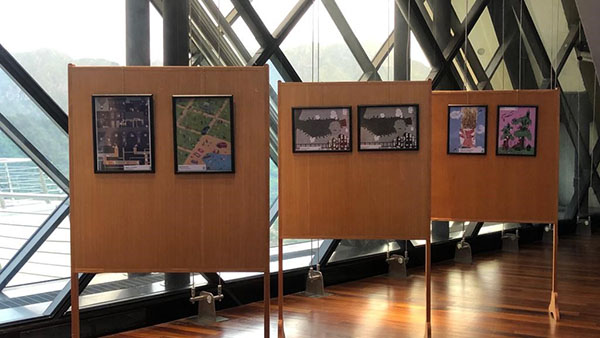
During the conference, activities organized by the regional chapters of the Italian Library Association (AIB) were showcased on-site. The AIB-Emilia Romagna chapter curated an exhibition based on its initiative “Biblioteca, voci da un giardino in movimento” (Library: Voices from a Moving Garden)—a contest for young illustrators that envisions the library as a garden, a space that is constantly open.
AIB-Campania also coordinated an exhibition by a local artist who transforms old books into beautiful sculptures. Additionally, AIB-Campania set up two information points dedicated to its projects: the first focused on “Parole in Circolazione” (Words in Circulation), an initiative facilitating book donations, and the second on “Mamma Lingua, Storie per tutti” (Mother Tongue, Stories for Everyone), a project that promotes integration through reading and ensures no one is excluded.