Architecture and Engineering for Intangible Heritage
Culture as a factor of development
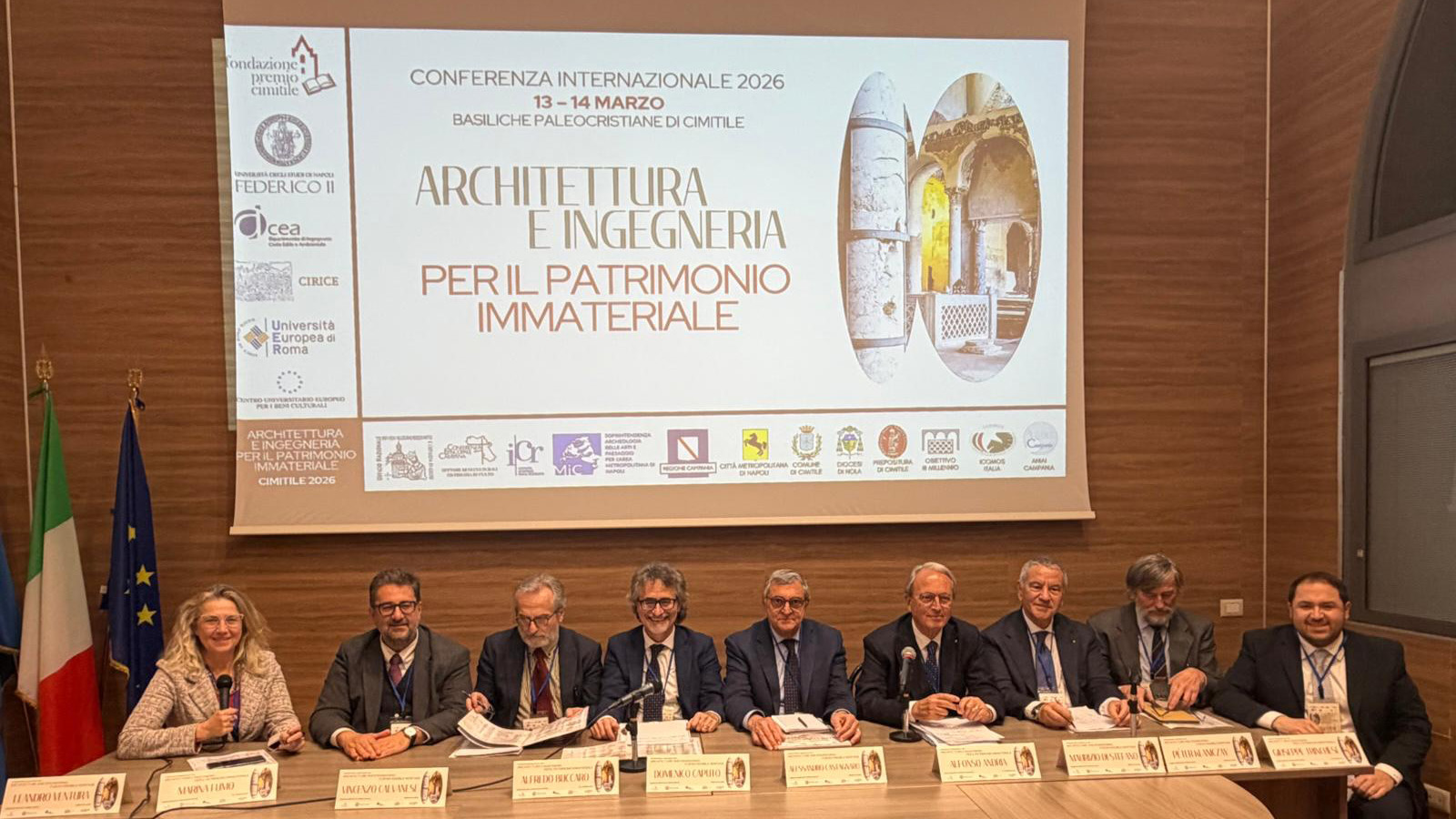
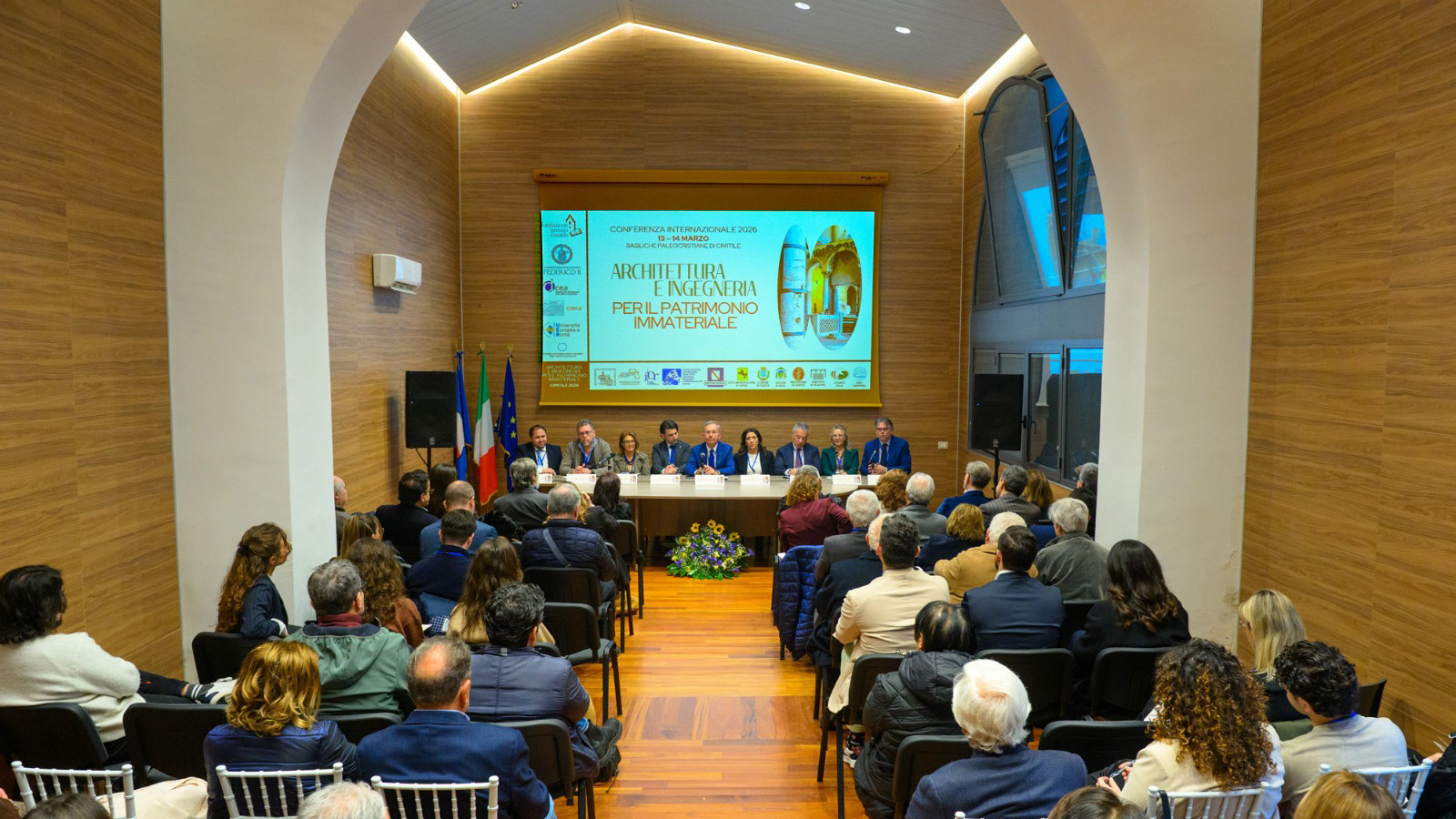
"AIPIC 2026 International Study Days – Architecture and Engineering for Intangible Heritage"
-
March 13–14, 2026
“The initiative was promoted by the Fondazione Premio Cimitile and the University of Naples Federico II, with the contribution of the Campania Region, the Metropolitan City of Naples, and the Municipality of Cimitile, and in collaboration with the Diocese of Nola and national and international institutions and research centers, including the European University Centre for Cultural Heritage (Ravello).”
“The inaugural day opened with the Poster Session, coordinated by Dr. Antonia Solpietro from the Cultural Heritage Office of the Diocese of Nola. This was followed by the study sessions, which began with institutional greetings from Dr. Felice Napolitano, President of the Fondazione Premio Cimitile; Don Giovanni De Riggi, Provost of Cimitile; Prof. Arch. Marina Fumo, President of the Scientific Committee; Eng. Arch. Giuseppe Trinchese, Coordinator of the Scientific Committee; Arch. Paola Ricciardi, Superintendent of ABAP Naples; Prof. Eng. Francesco Pirozzi, Director of the DICEA Department (Unina); Prof. Giuliana Albano, General Secretary of the Pontifical Theological Faculty of Southern Italy; and H.E. Mons. Francesco Marino, Bishop of Nola. The conference then entered its core phase with the scientific sessions coordinated by Federico II University professors Gigliola Ausiello and Alfredo Buccaro. The debate focused on the complex intersection between the cult of Saint Felix and the memory of places, analyzing Paulinus’s ‘catechetical architectures’ as models that remain relevant today, spanning history, image, and landscape transformation.”
“In the afternoon, following the session on the geography of faith, sacred itineraries, stops, and services, the invited lecture was delivered by Prof. Claire Sotinel (Université Paris Est Créteil). Her presentation focused on the site of San Felice sul Pincio, a significant example of the persistence of intangible heritage despite the loss of the built heritage. The day concluded with the round table discussion ‘Cultural Heritages: Recognition and Safeguarding’, featuring contributions from university research centers as well as national and international institutions in the sector.”
“The second day marked the transition from theoretical reflection to strategic planning, exploring religious heritage as a driver for development and innovation. The focal point of the morning was the lecture delivered by the Rector of the Polytechnic University of Tirana, Prof. Andrea Maliqari. The scientific sessions, coordinated by professors Antonella Violano (Unicampania) and Enrico Sicignano (Unisa), addressed the integration of Digital Humanities and intangible cultural heritage. A major highlight was the closing report dedicated to the current restoration works at the Cimitile basilicas. The conference concluded with the round table discussion ‘Cultural Tourism: Prospects and Planning’, envisioned as a lever for territorial development. This session featured the participation of the Campania Region, represented by Dr. Rosanna Romano, General Director for Cultural Policies and Tourism, the mayors of Cimitile, Nola, and Avella, and key figures dedicated to regional development.”
“The two-day event, featuring more than fifty presentations, concluded with the award ceremony for the best papers and posters. This final moment highlighted the talent of researchers who demonstrated originality in interpreting the theme of AIPIC 2026, while simultaneously outlining the future perspectives of the project.”
“The event is held under the patronage of the International Council on Monuments and Sites (ICOMOS), the Central Institute for Restoration (ICR), the SABAP for the Metropolitan Area of Naples, the Central Institute for Intangible Heritage (ICPI), the Ecclesiastical Cultural Heritage and Places of Worship Sector, the ANIAI Campania, the Professional Orders of Engineers and Architects, and the Municipalities of Nola and Avella.”