Presentation of the Ravello Lab 2025 Recommendations: “Tourism & Culture for Place Regeneration”
Tools and methods for cultural policies
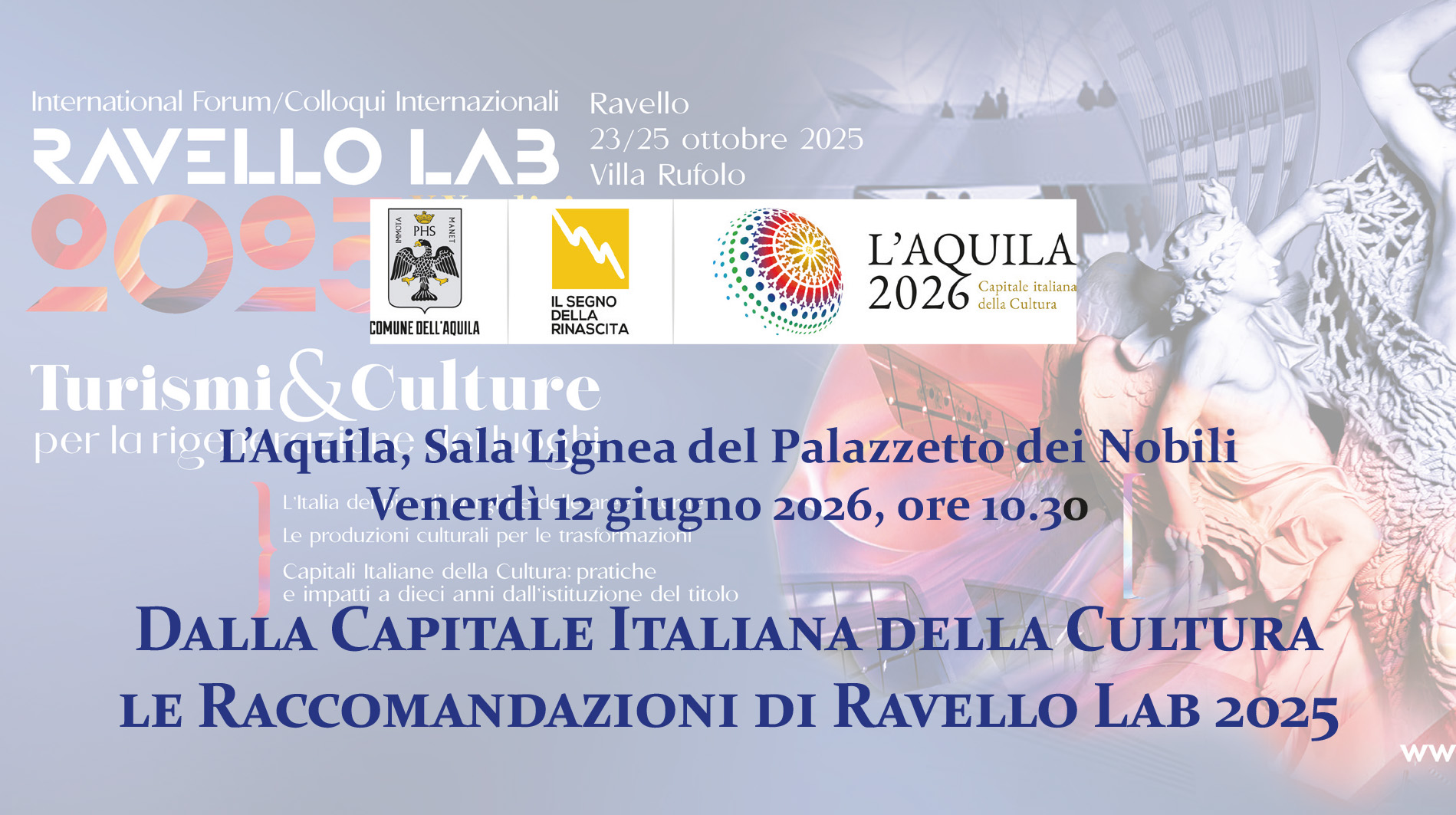
- June 12, 2026
Municipality of L'Aquila
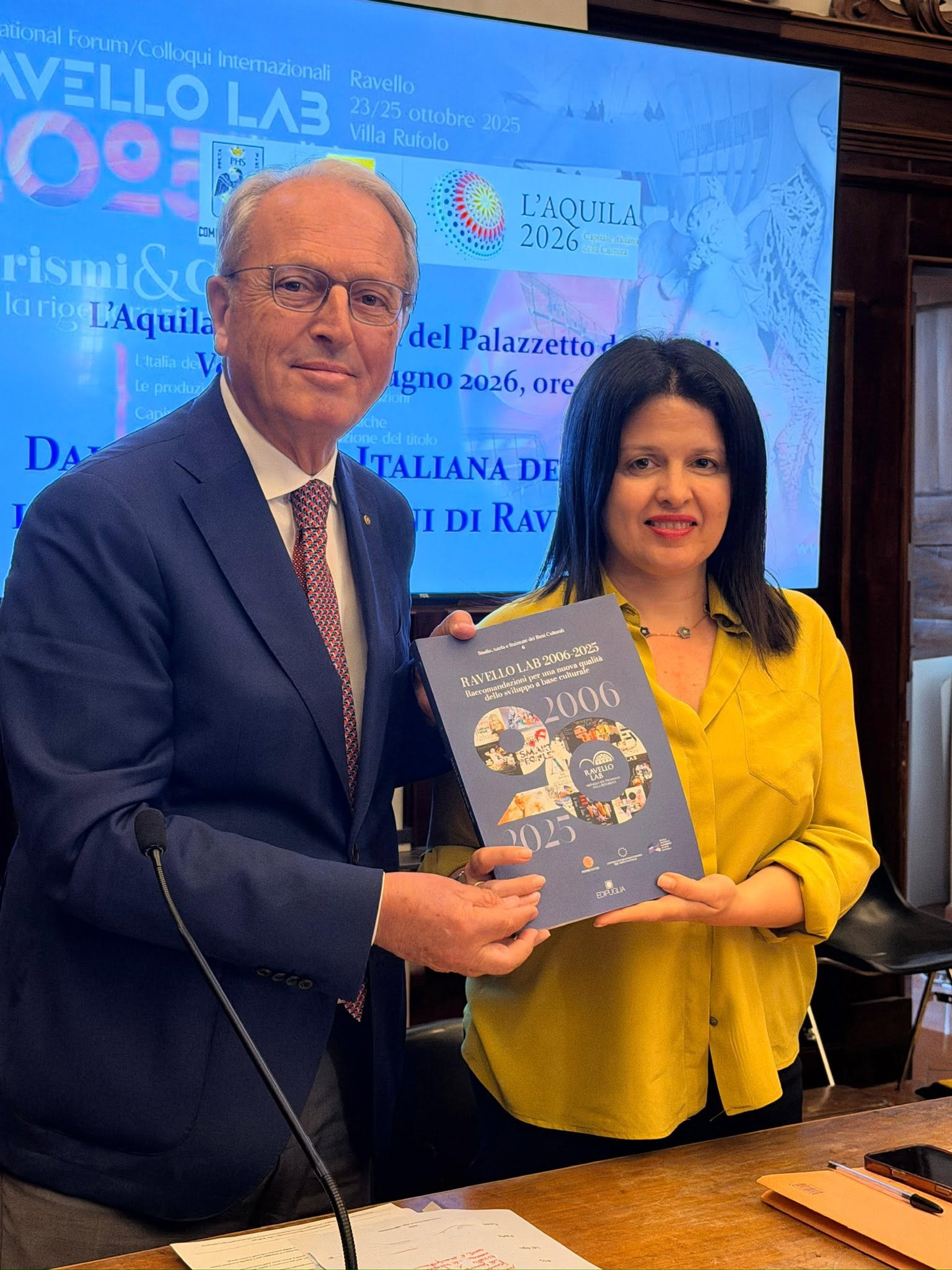
L’Aquila, Italian Capital of Culture 2026, hosted the public presentation of the “Recommendations”—guidelines for institutions and the government developed during the latest edition (the twentieth) of Ravello Lab-International Colloquia. This laboratory on culture and development is promoted by CUEBC, Federculture, and the National School of Cultural Heritage and Activities.
As was the case with the three previous editions (Brescia—Italian Capital of Culture 2023, jointly with Bergamo; Pesaro—2024; and Agrigento—2025), the results of the closed-door working sessions held in October 2025 among key national cultural stakeholders are being officially presented to national professionals and institutions by the city designated as the 2026 Italian Capital of Culture. This marks a recognition of the role Ravello Lab has played since its inception in fostering the adoption—within the Italian context as well—of the “European Capital of Culture (ECoC) development model” as a driver for culture-led strategic planning, a process that led to the establishment of the Italian Capitals of Culture initiative in 2015.
“Italy’s small towns and inland areas,” “Cultural productions for transformation,” and “Italian Capitals of Culture: practices and impacts ten years after the title’s inception”—these were the themes of the three panels at the 2025 edition of Ravello Lab. They generated a series of insights and reflections intended to be conveyed—in the form of recommendations—to institutions and professionals in the cultural and business sectors.
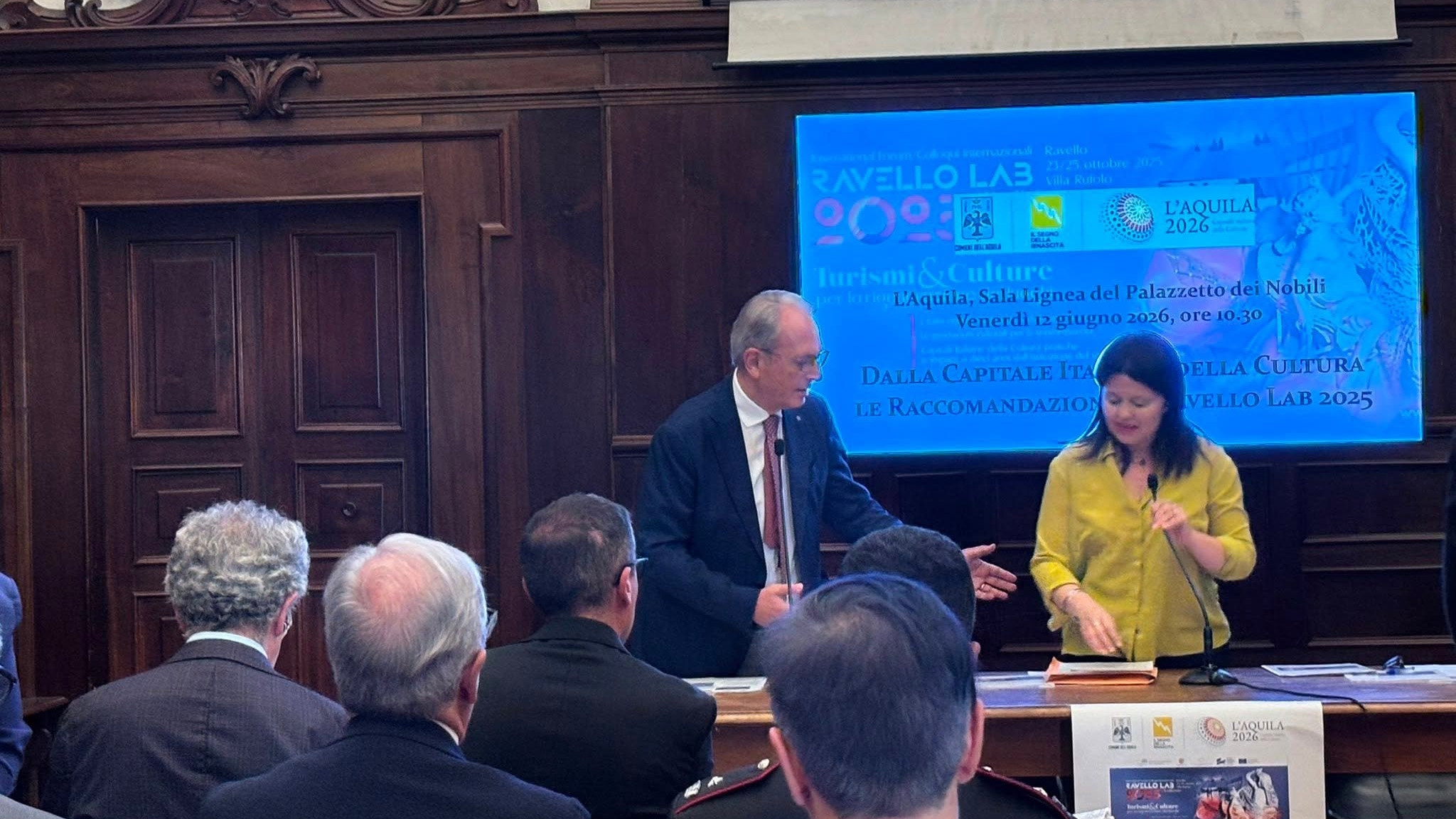
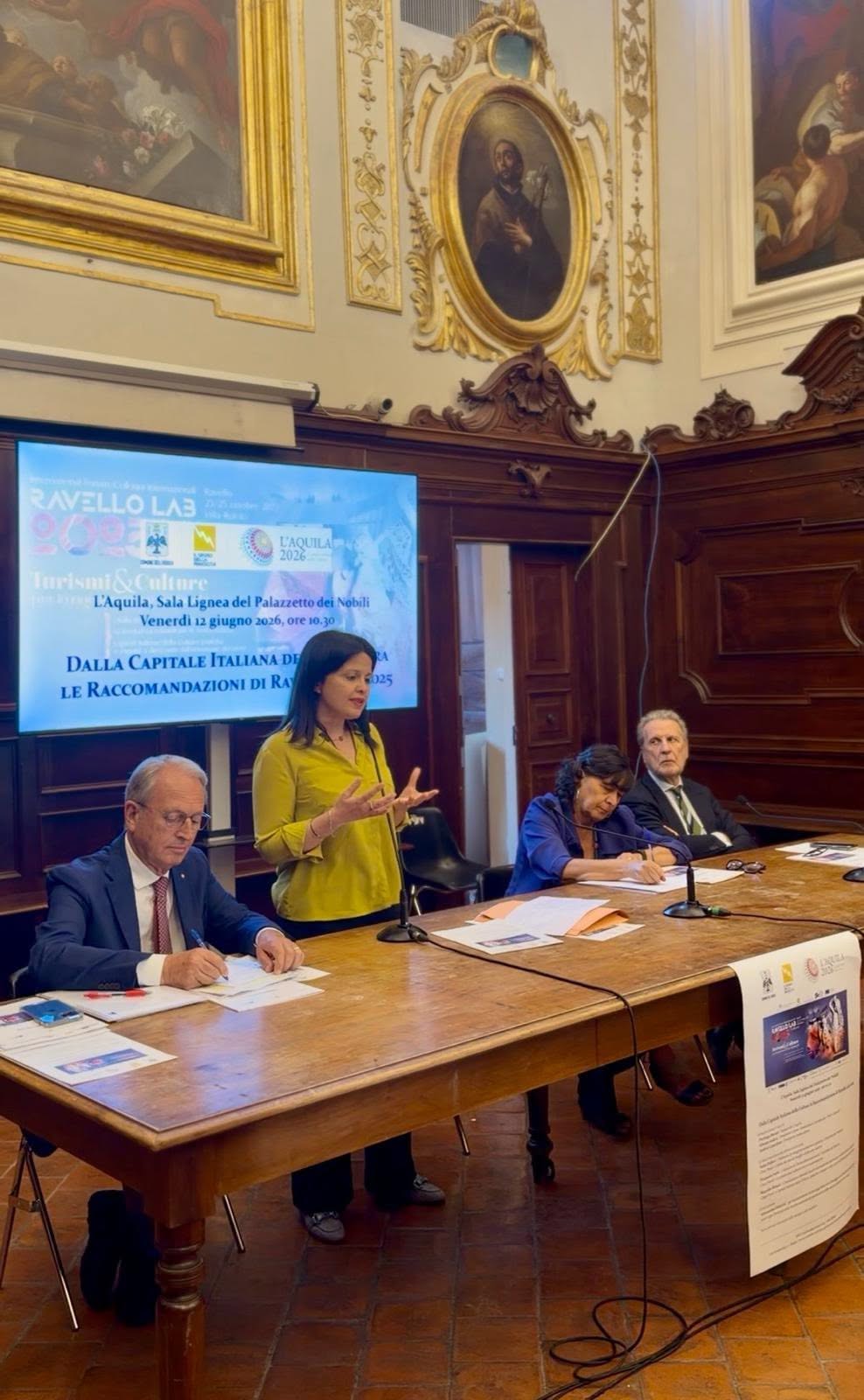
The meeting took place in the presence of Ersilia Lancia, the Councillor for Tourism for the Municipality of L’Aquila, representing Mayor Pierluigi Biondi; the Mayor was unable to attend due to an official engagement out of town but was present to offer informal greetings before the proceedings began. Among the guests was architect Alessandra Vittorini, a key figure in the long and complex process of restoring L’Aquila’s cultural heritage, which had been severely damaged by the 2009 earthquake.