Foto_Home_Cuebc.jpg

Premio Nazionale per la Valorizzazione del Patrimonio Culturale materiale ed immateriale "Patrimoni Viventi" edizione 2019:
i vincitori
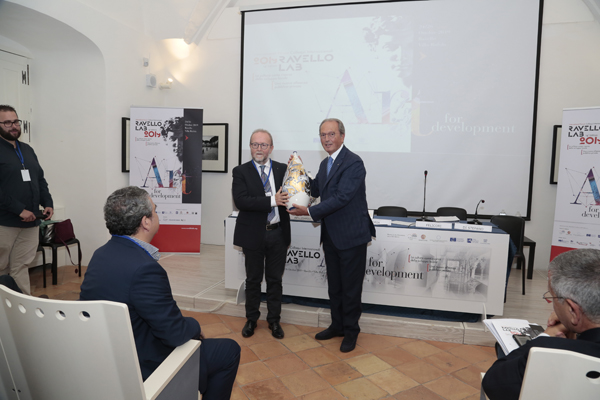
 

Per la sezione "Enti Pubblici", 1° classificato il progetto "storie senza Storia. Tracce di uomini in guerra (1914-1918)” promosso dall'Ufficio beni archeologici della Soprintendenza per i beni culturali della Provincia autonoma di Trento.


Per la sezione "Enti Privati", 1° classificato il progetto "La Grande Bellezza"  promosso dall'Associazione Culturale OFFICINAE EFESTI.

Particolarmente significativi sono risultati i progetti:
nella sezione "Enti privati"
"Rinasce Pozzo Sella", dell'Associazione ONLUS Pozzo Sella Per il Parco Geominerario;
"Teatro all’aperto borgata Paraloup – Prima edizione Festival Frontiere (luglio 2018)", della Fondazione Nuto Revelli Onlus

nella sezione "Enti pubblici"
"Palazzi Aperti" del Comune di Trento – Servizio Cultura, Turismo e Politiche Giovanili
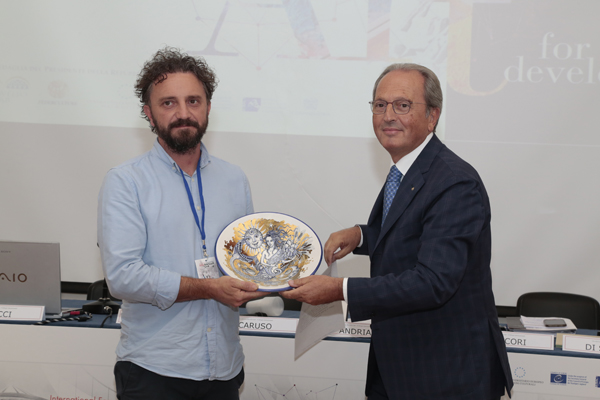
Il riconoscimento speciale "Patrimonio Vivente" è andato a Antonio Pellegrino, fondatore e presidente della Cooperativa Sociale Terra di Resilienza di Morigerati, nel Cilento.
Ai premiati una pregevole opera ceramica dell'artista vietrese Franco Raimondi

Descrizione e immagini dei progetti sono state pubblicate nel n. 37 di Territori della Cultura.


Premio Nazionale per la Valorizzazione del Patrimonio Culturale materiale ed immateriale "Patrimoni Viventi" 2018:
i vincitori

Per la sezione "Enti Pubblici", 1° classificato il progetto "Sparta. La lavorazione della Ginestra a San Paolo Albanese" promosso dal comune di San Paolo Albanese.


Per la sezione "Enti Privati", 1° classificato il progetto "Riabitare la Terra 2017"  promosso dall'Associazione GruCA onlus.

Particolarmente significativi sono risultati i progetti:
nella sezione "Enti privati"
"Universo Alcantara, borghi antichi per nuovi viaggiatori", dell'Associazione Mediterranean Pearls A.P.S. e Rete di scopo “Universo Alcantara;
"Da Solunto ai monti Sicani: i Cammini della fede tra mare, riserve naturali e tradizioni", dell'Associazione Culturale Facitur  

nella sezione "Enti pubblici"
"Alla scoperta dell'Alto Salento: Itinerari" del Comune di Mesagne

Descrizione e immagini dei progetti sono stati pubblicati nel n. 33 di Territori della Cultura.


The aim of “MODI-FY - Maintaining Historic Buildings and Objects through Developing and Up-grading Individual Skills of Project Managers: Fostering European Heritage and Culture for Years to come
is to provide professionals – Project Mangers for Maintenance of Historic Objects - with the required certified skills and competences to help responsible organisations in developing innovative VET (Vocational Education and Training); this includes

recognition of previous learning and already available skills
blended learning offer for Project Managers and Assistant Project Managers for Historic Objects
train-the-trainer education for experts in maintenance of historic buildings
establishment of a European certificate issued by ECQA – European Certification and Qualification Association

The consortium addresses these needs by developing a model of certified education for people working in management of historic buildings and sites. In a blended training approach old and new skills and competences will be merged into a standard requirement for current and future employees of the partner organisations as well as their suppliers and subcontractors.

The project results will be made available to other organisations around Europe and the World after completion of the project. By offering a certified training, acknowledged by ECQA, linking it into ECVET and European Skills Passport, “MODI-FY” helps responsible bodies to guarantee the survival of European historic treasures and protected heritage.
This way, future generations can still enjoy the impressive heritage of European countries in all its glory.

A short research across Europe has shown that there is no specific VET and/or other education available that contains all required skills/competences for people working in/ for responsible bodies of historic buildings.
The main motivation of partners for this project is to fill the gap between the requirements of job, the available education and existing know-how in the relevant organisations.
In a blended training approach the required skills – “old” ones, available in organisations, and “new” ones - considered necessary for the jobs in question - will be merged into a (pre) requirement for current/future employees and volunteers of the partner organisations, their suppliers and sub-contractors. In co-operation with ECQA, the training will provide professionals/volunteers with the required certified skills and help responsible organisations to guarantee the survival of European historic treasures and protected heritage.

Target persons
1. Project managers of historic buildings
2. Volunteers working for responsible bodies
3. Architects and structural engineers
4. Civil engineers and planning offices including diagnosis specialists
5. Restaurateurs and stuccoers
6. Art historians


The partnership

:
BHOE (Burghauptmannschaft) - exists for centuries, 50 years expertise in maintenance of historic buildings, looking after world famous historic buildings across Austria.

UBW GmbH - highly experienced in project management and in EU projects, as well as in developing, organising and conducting training courses and other events. As a long-term partner of BHÖ these competences and experiences are also related to historic buildings.

ECQA (European Certification and Qualification Association) - established an EU Certificates Online Campus with online skills assessment, online exams and certifications.

:
CUEBC - has experts on architecture, conservation and cultural heritage, combined with training skills. Another strength is the wide experience in cultural heritage and sustainable development.

:
NT (National Trust) - one of the largest heritage and conservation NGOs in Europe with over 4.1m members. Over 5,000 staff and 70,000 volunteers’ main activities are the preservation and conservation of heritage assets considered to be of national importance.

:
Landkommanderij Alden Biesen - a state cultural, conference and seminar centre, part of the Ministry of Culture, Art & Heritage agency of the Flemish government, and is based in a historic castle with a European mission.

:
MRA - a non profit civil organisation, based on a successful NGO model in the UK (NECT). Its objectives are to preserve the built heritage of Hungary.

:
NTS - a non-governmental organisation which mission is conservation and sensible use of cultural and natural heritage of Slovakia.

:
“Secretaria Geral da Presidência da República “ - an inside office of the government, technical, non-political department, responsible for taking care of all the quotidian affairs, including maintenance, conservation, and rehabilitation of all the historical buildings belonging to the Presidency of the Republic.


This project is co-funded with support from the European Commission. This publication reflects the views only of the author, and the Commission cannot be held responsible for any use which may be made of the information contained therein.


in collegamento con

DARTS. Digital Art and Storytelling for Heritage Audience Development
CREATIVE EUROPE – Cooperation Projects ( 2014-2016)

Leader: Centro Universitario Europeo per I Beni Culturali, Ravello
Partners: Landcommanderij Alden Biesen (B) – Museum Campolung and Association for Protection and Promotion of the Corvin Castle in Hunedoara (Ro) – Università Telematica Pegaso (I)


The project aims at telling the stories about some European historic complexes through new digital technologies and enhancing them through European-wide artistic competitions in order to make them more appealing to new audiences. Using digital narratives will support the collaborative learning and exploration of cultural heritage by young people.
The project involveS three European historic complexes that represent different categories of buildings but share some characteristics:
- they are historic complexes with many stories to tell,
- they has been recently restored,
- they has been transformed into cultural or touristic centers,
- they will profit from actions of enhancement.

The selected case-studies are:
The Villa Rufolo in Ravello (Italy): the villa was built in the XIII century by the noble family Rufolo in the Amalfi Coast, a Unesco site since 1997. The villa was restored in the XIX century by Sir Francis Nevile Reid, member of a wealthy Scottish family, while the wonderful garden was enriched by different rare vegetable species. Today the villa belongs to the “FondazioneRavello” and hosts cultural associations, temporary exhibitions, chamber music concerts, etc… a part of the complex is under restoration. Many famous and unknown characters lived in this area: noble families, common people, farmers, musicians (as Wagner), storytellers (as Boccaccio). Thanks to them the villa has many stories to tell.

The Landcommandery Alden Biesen (Belgium): the 16th-century castle is located in the small village of Rijkhoven in the municipality of Bilzen in the province of Limburg. The knights of the Teutonic Order originally founded the Landcommanderij Alden Biesen ("commandery of Alden Biesen") in the 11th century, but the current buildings were constructed between the 16th and 18th centuries. The castle was the headquarters of a bailiwick or province of the Teutonic Order in the region of the Maas and Rhine. On 8 March 1971 the complex burnt down and was acquired by the government. The buildings were restored and transformed into an international cultural center, that today hosts a museum related to the Teutonic Order, an artistic collection, a library international and organizes conferences, art exhibitions and cultural events.

The Hunyad Castle (Transylvania, Romania): the 14th century castle, also known as Corvin Castle or Hunedoara Castle, is located on a rock above the small Zlaști River in Hunedoara, in the region of Transylvania. The castle was built by King Charles I of Hungary over the site of an older Roman fortification. In 1409 it was given as severance to John Hunyadi's father, by Sigismund, king of Hungary. The castle was rebuilt between 1441 and 1453. After the death of John, the castle passed to his son Matthias (Corvinus) who enlarged it combining Gothic and Renaissance styles.
After a severe destruction in 1854 and many years of neglect, the castle was restored even if many original elements have been destroyed. Today the castle is a large and imposing building with tall and diversely colored roofs, towers and myriad windows and balconies adorned with stone carvings. It has been transformed into a museum, which exhibits archeological findings, ancient books, decorative arts and arms. It also hosts temporary exhibitions and concerts.
The castle is often associated to the Count Dracula and it is believed that it inspired the book by Bram Staoker.

The main idea on which the project is based is to launch one international ideas competition for young digital artists and one international contest for young storytellers.


For further information and updating: http://www.darts4had.eu/


in collegamento con

Soci fondatori

Sponsors

Soci 2