The insights gathered in the “Recommendations” from the 2023 edition of Ravello Lab are being brought to national attention from the stage of the Italian Capital of Culture 2024—Pesaro—thanks to an invitation from Mayor Matteo Ricci.
This is significant recognition of the contribution made by Ravello Lab to the debate on culture-led strategic planning—a debate that, starting in 2015, led the MiC to establish the Italian Capital of Culture program based on the “ECoC (European Capital of Culture) development model.”
Ten recommendations emerged from the discussion held by Panel 1 (Training for Work in the Cultural Sector), revealing that training is permeated and structured by culture—embodying its values—while simultaneously helping to convey and nourish it, thereby playing a fundamental role in establishing culture as a source of identity and a key resource for the development of local communities and territories.
Panel 2—dedicated to international cultural relations—produced six recommendations highlighting strategic concepts such as cultural pluralism linked to intercultural dialogue; the importance of the relationship between the Ministry of Culture and the Ministry of Foreign Affairs; the role of museums, art centers, and cultural venues in general in keeping channels of dialogue open with conflict zones and preserving cultural heritage in at-risk areas; and the intensification of support for foreign trade mechanisms targeting cultural products.
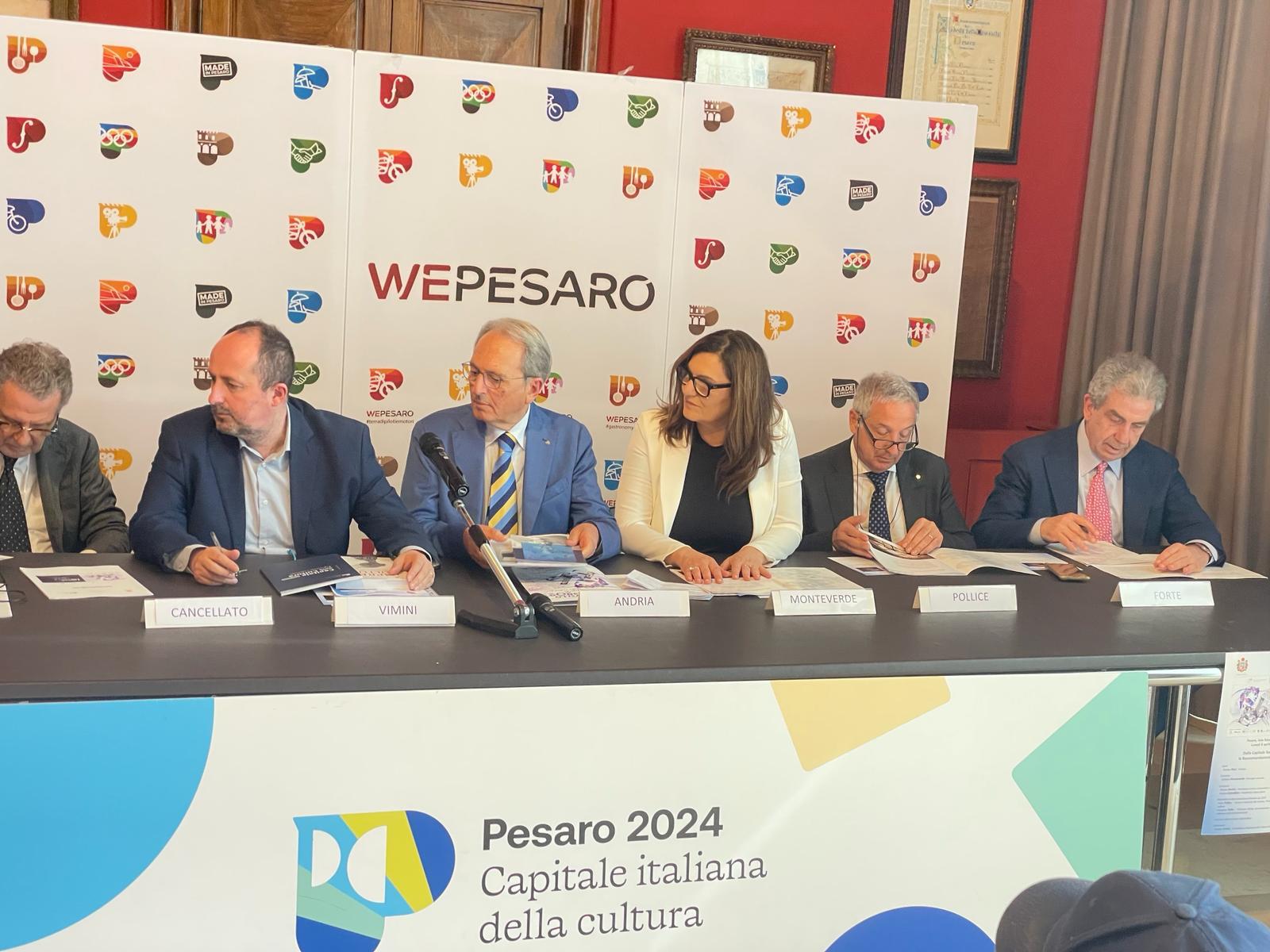
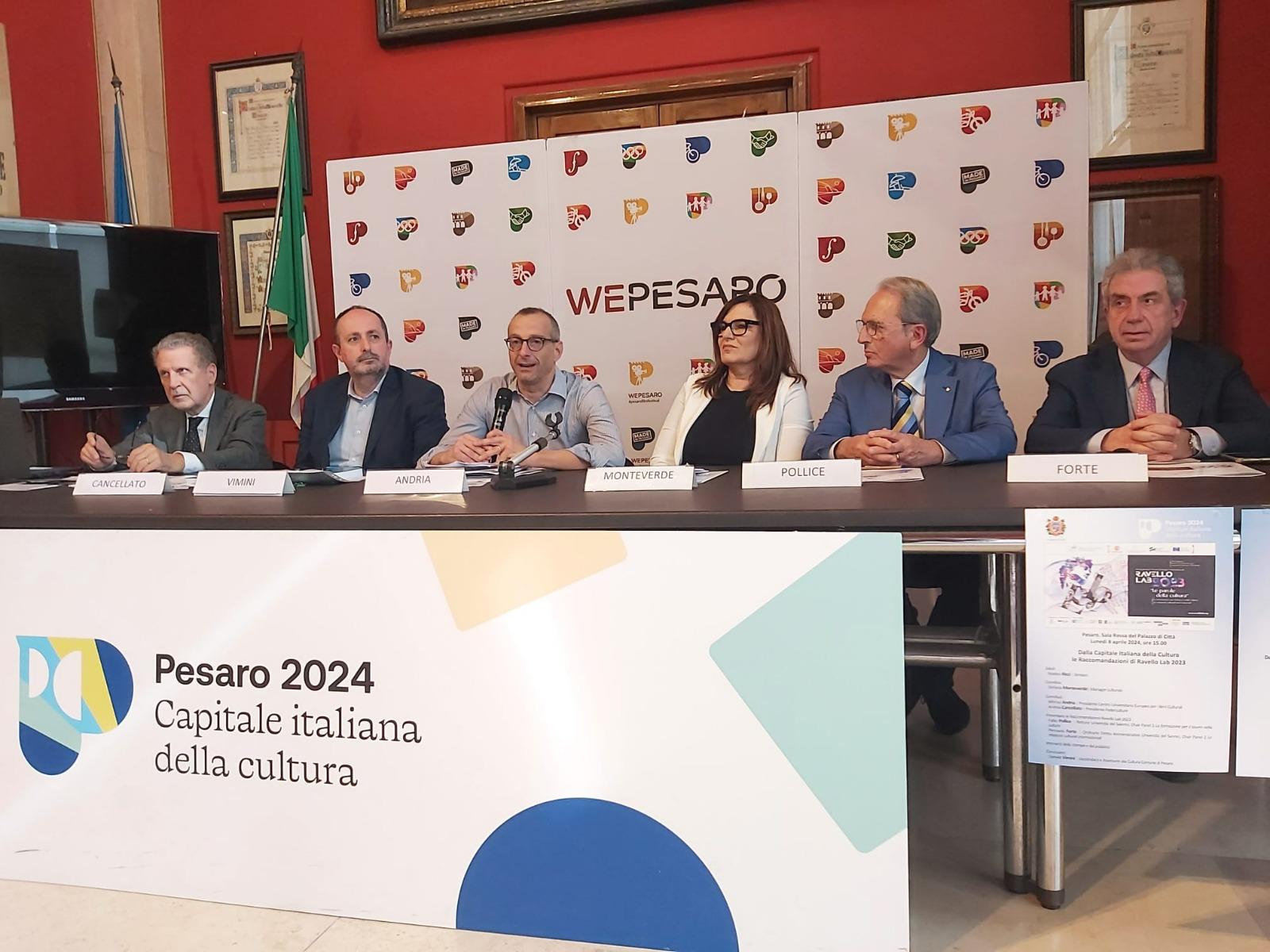
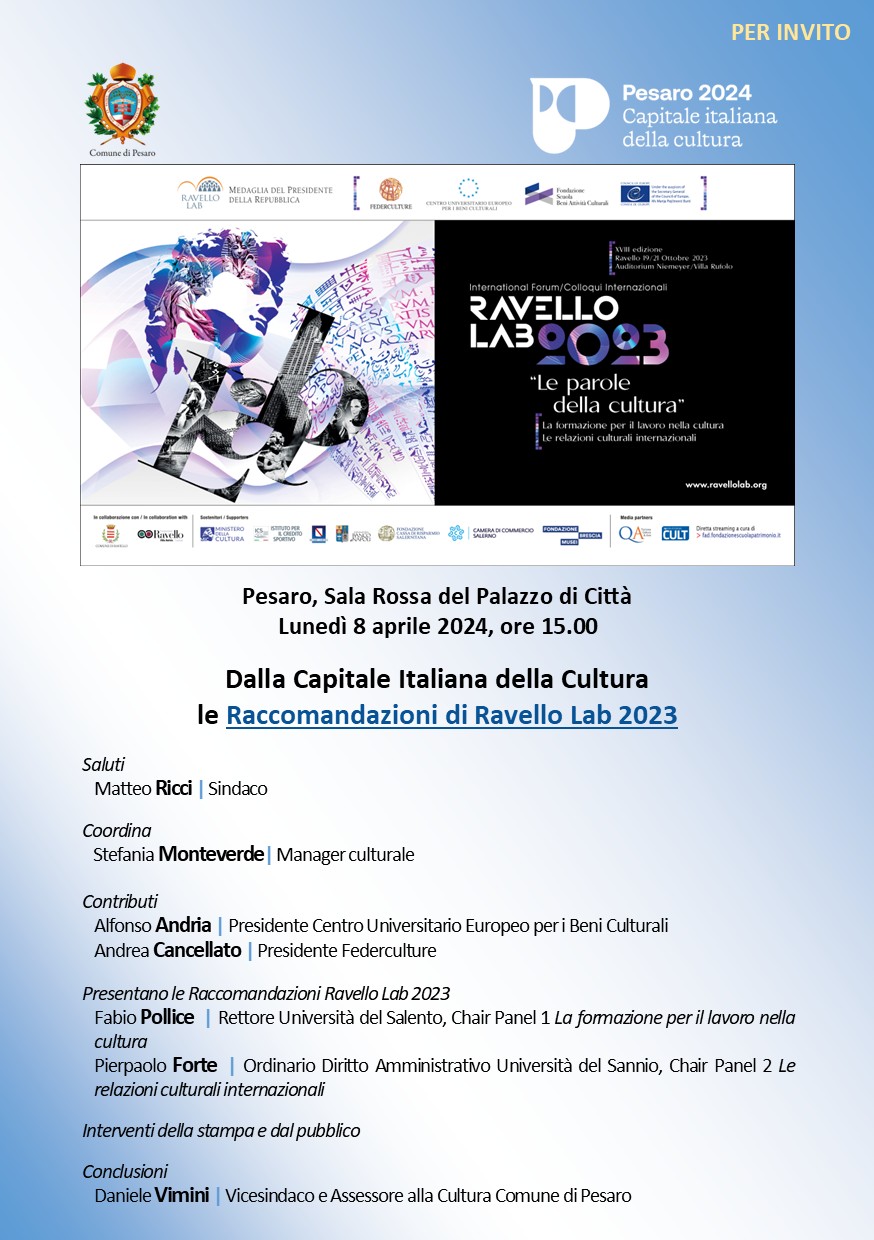
The findings of the two panels were presented by their respective chairs: Fabio Pollice, Rector of the University of Salento, and Pierpaolo Forte, Full Professor of Administrative Law at the University of Sannio.
Speakers included: Matteo Ricci, Mayor of the City; Alfonso Andria, President of the European University Centre for Cultural Heritage; Andrea Cancellato, President of Federculture; and Daniele Vimini, Deputy Mayor and Councillor for Culture of Pesaro.
The coordination of the work was entrusted to Stefania Monteverde, a cultural manager and former Councillor for Culture for the Municipality of Macerata.